US$125 for 30 minutes of AI. Here's why I'd pay it.
What Anthropic's latest model did for me, and what it means for data centres.


US$125. That's what 30 minutes with Anthropic's latest model would have cost me. Here's why I'd pay it.
This week, let's talk about AI models and what I'm increasingly convinced will happen. And yes, data centres are involved too.
No signs of slowing
In the first 10 months after the release of ChatGPT, there was scepticism that AI models would keep getting better, or prove to be of any practical use. There were a few reasons for that. ChatGPT could only handle text at first, plenty of people dismissed it over its hallucinations, and the supply of original training data looked close to exhausted.
But new innovations soon produced multi-modal AI, beginning with voice and image. Techniques such as Mixture of Experts (MoE) and reasoning made large language models considerably better. At the same time, efforts to build faster AI accelerators mean Nvidia's upcoming Vera Rubin is 25 times faster (FP4) and 40 times cheaper in token cost than the H100 sold the year ChatGPT was released.
I don't see things tapering off any time soon. Having used AI for coding since Opus 4.6, I've watched each model get noticeably better.
AI that actually works
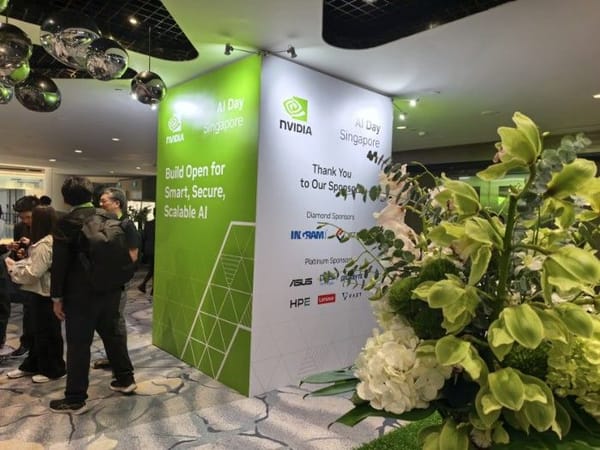
At GTC Taipei this month, Jensen Huang spoke of the arrival of useful AI. Having created a number of apps over the past three months, I very much agree. (You can read what I wrote about Computex here, here, here, and here).
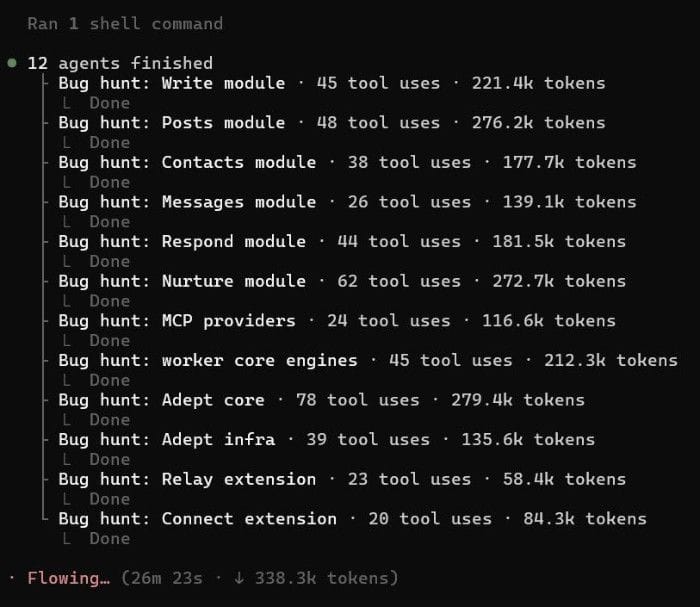
In my case, I had the Fable 5 model scan an app I'm working on for bugs. It found 110, complex ones involving multiple components, which I then had it fix over the course of a day. Fable is included in my Claude subscription for two weeks, so I didn't have to pay cash. But the point stands: it did work that was completely beyond me.
As AI becomes genuinely useful, doing work we could not usually do ourselves, expect AI inference to surge. And that means we will need a lot more data centres than we have today.
In uncharted waters
The future is unknowable. But as AI continues to improve, I believe we can expect two things at once: a massive impact on jobs, and a wave of new opportunities.
On the first, make no mistake, AI has completely upended the traditional assumption that senior roles have an easier time of it. I wrote about this in a separate piece, "AI doesn't care how senior you are." On the second, I know of users who are now working day, night and weekends, taking on multiple commercial assignments simultaneously by leaning on LLMs.
We are in uncharted waters, and it makes far more sense to explore what AI can do for you and your role than to ignore it.