AirTrunk doubles down in Johor, pushes to 700MW
Two new campuses, 280MW of IT load, and hints of higher-density AI deployment in the design.

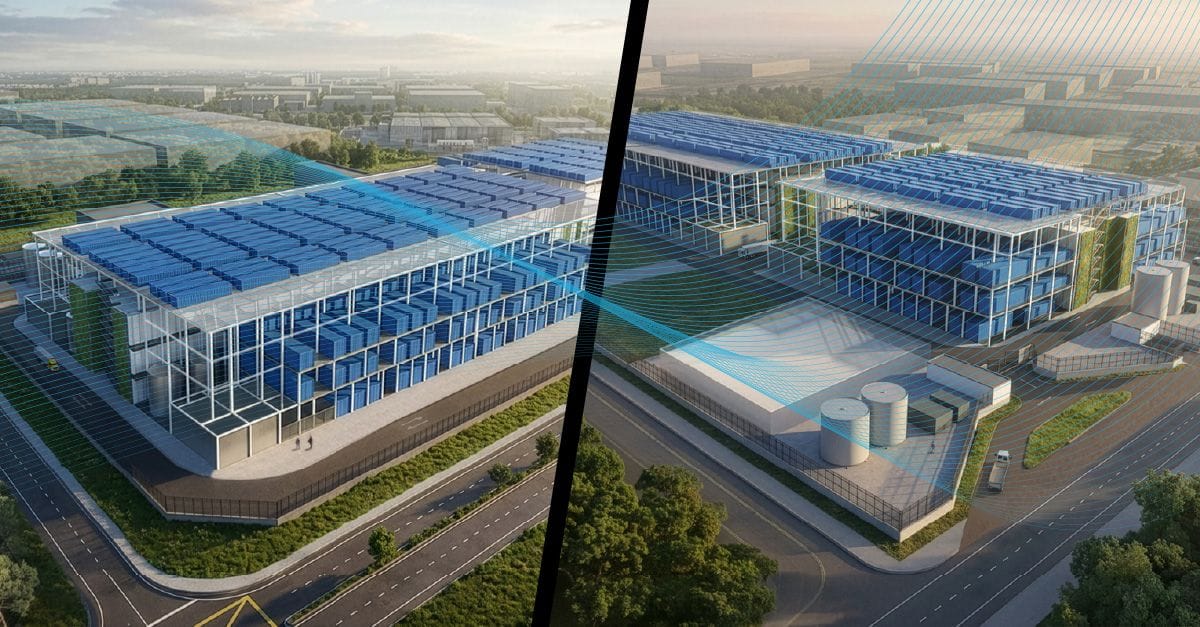
AirTrunk today announced two massive new hyperscale data centre campuses totalling 280MW in Johor. And it plans to build even more data centres in Malaysia, the hyperscale giant says in its press release. Here's what we know so far.
Doubling down in Johor
AirTrunk says it will invest US$3 billion to develop JHB3 and JHB4. With a combined 280MW of IT load, the two campuses sit in close proximity to its existing JHB1 and JHB2 data centres.
As with its other announcements, only broad details were offered. The new campuses will be located at Iskandar Puteri, will utilise 100% recycled water, and have been designed to prioritise energy efficiency while supporting cloud and AI workloads.
When fully built up, the four campuses will give AirTrunk 700MW in Malaysia, putting it in a neck-and-neck race with Vantage Data Centers for the title of the largest operator in the country.
Clues in the design
Zooming in on the artist's renditions reveals multi-storey buildings with massive parallel steel structures for mechanical cooling systems, which also cover the rooftops.
Assuming the final data centres look even remotely similar, this would suggest a much higher density deployment typical of AI workloads.
What's also interesting is how AirTrunk's JHB1 and JHB2 campuses at 420MW IT load are "almost 100% contracted," according to the firm. This probably explains AirTrunk's note in its press release that it is "planning further expansion in Malaysia [after] JHB3 and JHB4."
A more measured era
In my view, the days of unbridled data centre growth are effectively over in Johor. Yes, more data centres will be built, including some truly massive ones I'm hearing about in the pipeline.
But as the reality of resource constraints bites, new capacity allotments will be managed carefully. For now, the Malaysian government has already stated its preference for AI-centric facilities.
I'll write more about this in another post. Among others, I expect new developments to face more regulations and greater scrutiny than before.