Three data centre rivals, one folder, ten years
Old brochures from three rivals tell a story about where the industry is heading.

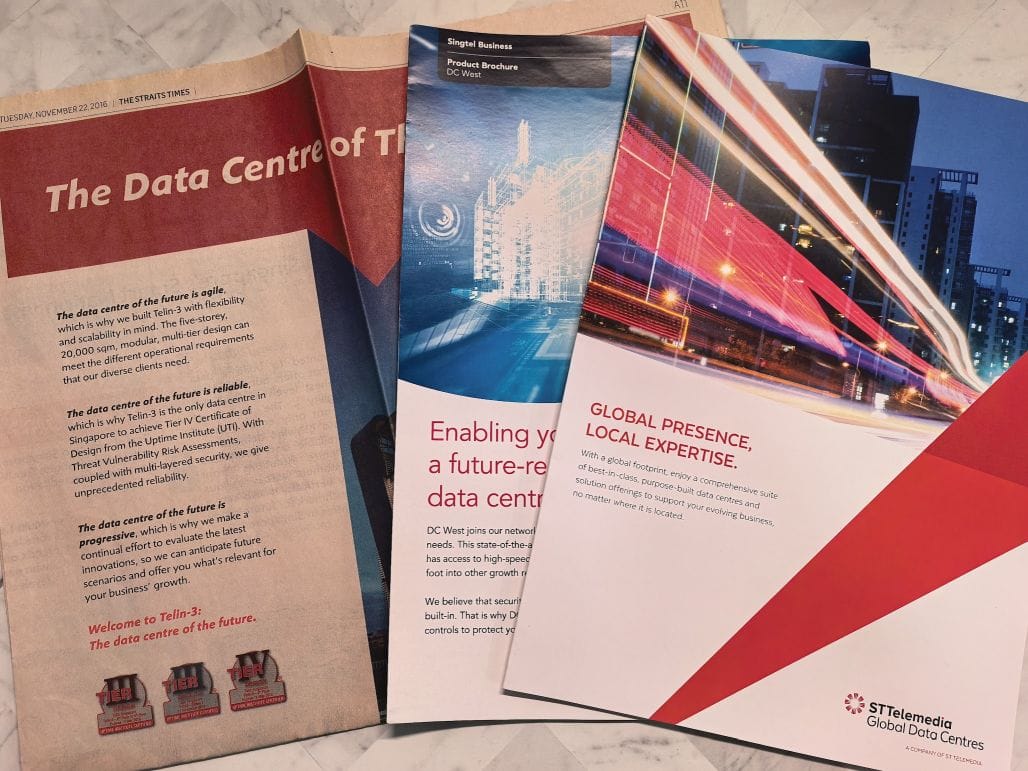
I found old collaterals from Singtel, STT GDC, and Telin in the same folder during spring cleaning. The coincidence was uncanny.
Over the years, I've worked on more content than I can remember. Sometimes I file a copy away as keepsake. In that folder were two brochures and a newspaper ad from three data centre competitors with different mandates, dated 10 years ago.
Today, their paths have converged in ways I never thought possible. What were once three separate players with distinct strategies are now intertwined through acquisitions and partnerships.
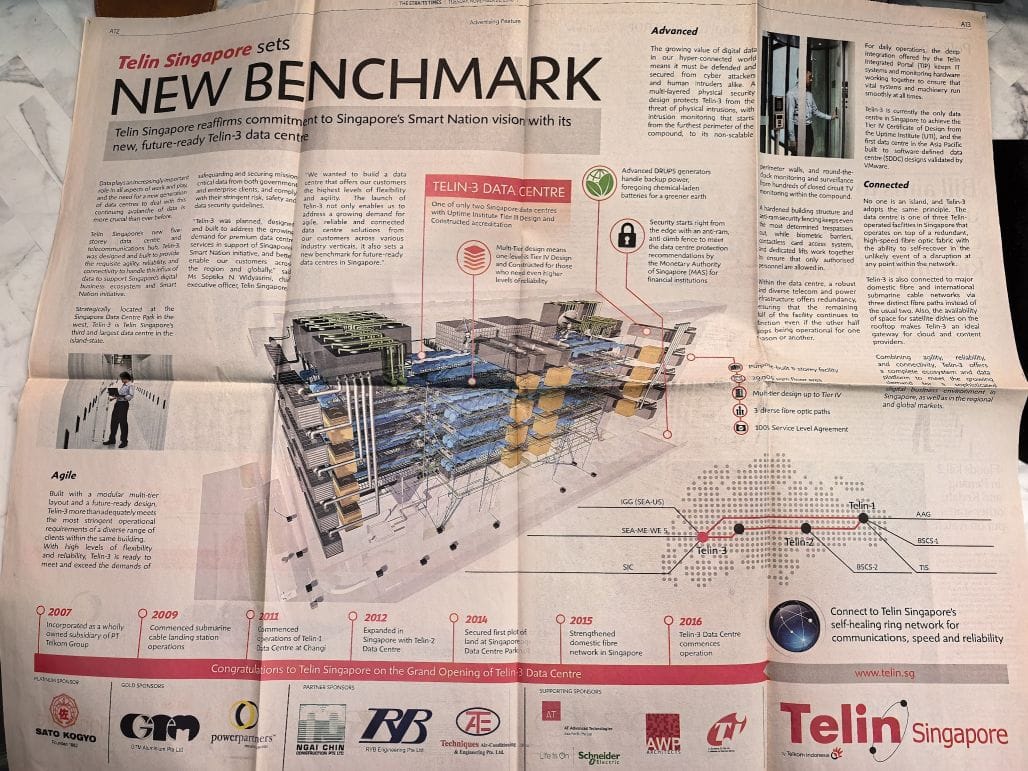
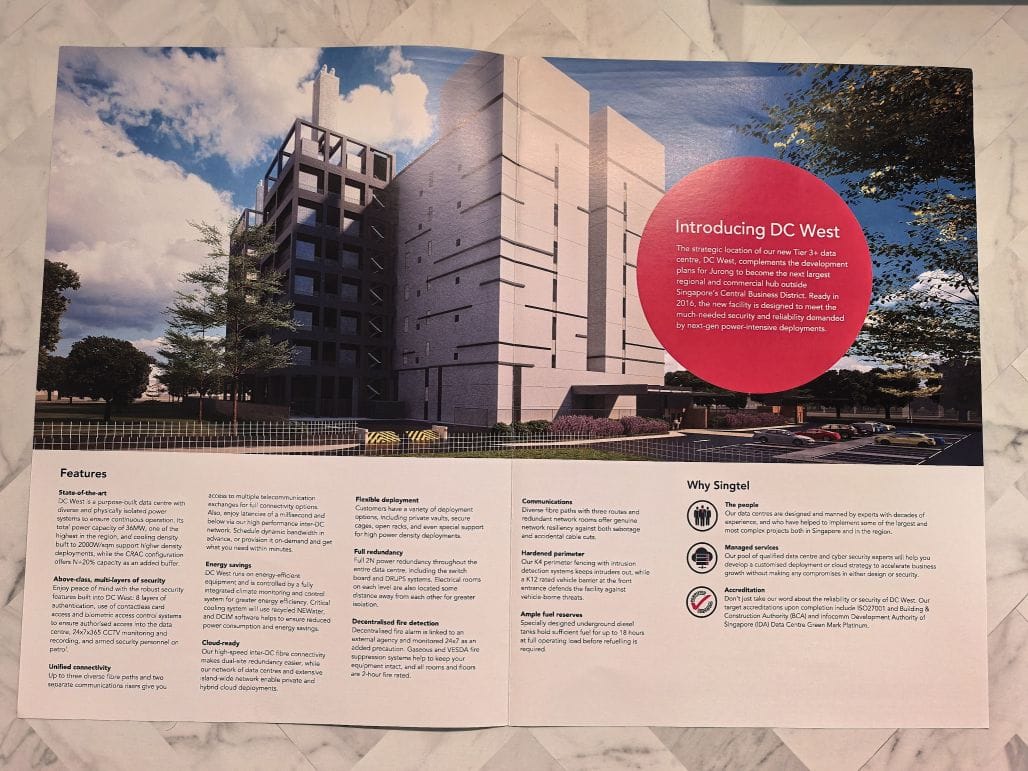
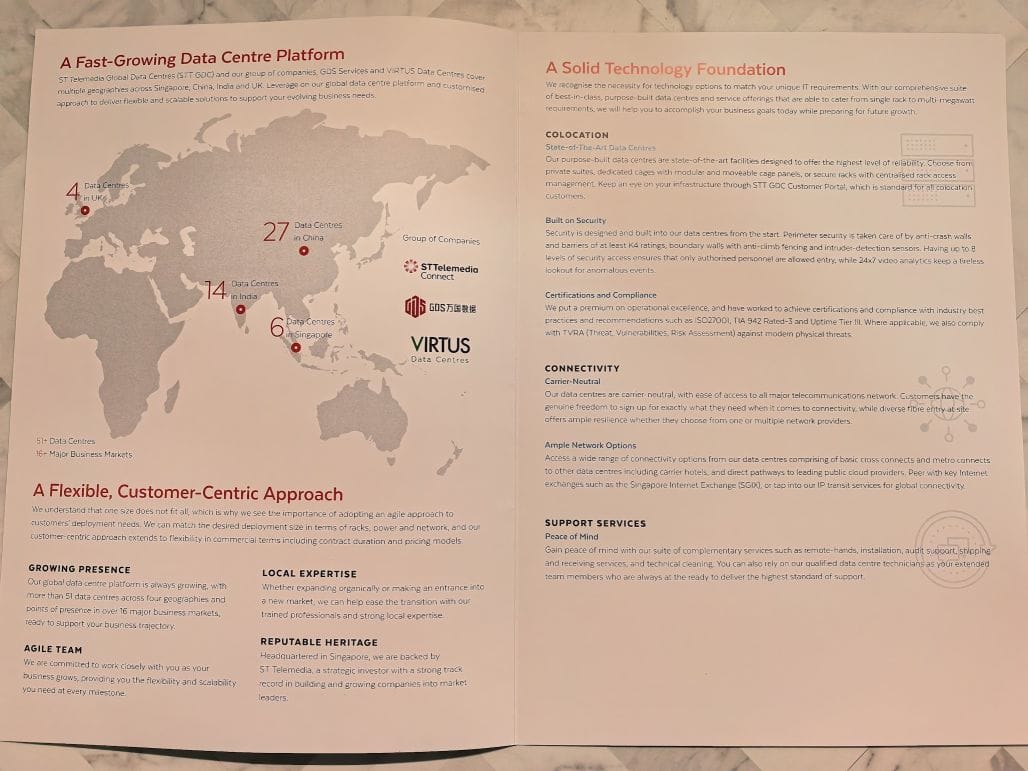
Photo Caption: (Left) Telin-3 on the Straits Times, (Middle) Singtel DC West brochure, (Right) STT GDC Brochure.
KKR and Singtel acquired STT GDC
Earlier this month, KKR and Singtel announced the acquisition of STT GDC for an implied enterprise value of around S$13.8 billion. One of the largest data centre deals in APAC, the transaction is expected to close by early second half of 2026. Together, the combined entity will operate across multiple markets with significantly greater scale and financial firepower.
NeutraDC and Singtel Nxera build Batam data centre
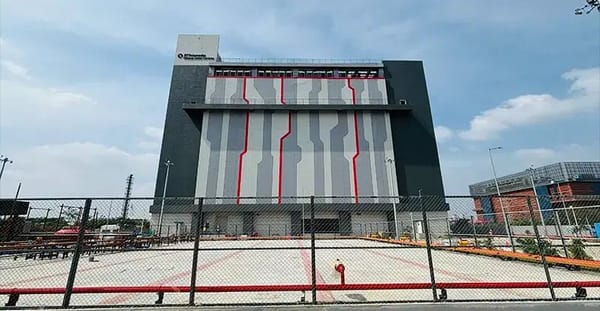
NeutraDC and Singtel Nxera are working together on a 50MW data centre at the Kabil Industrial Estate in Batam, Indonesia. It should be ready soon, as it was topped out in October last year. The Telin-3 data centre was transferred to NeutraDC in 2024.
Trip down memory lane
Here are some thoughts that came to mind as I looked through the old collaterals.
- Singtel DC West was among Singapore's largest data centres when it launched in 2016. Today, most data centre campuses in Johor are three, five, even 10 times larger. At that time, there were zero data centres in Johor.
- STT GDC's emphasis even back then had been on building data centres in multiple markets with a focus on local expertise. I believe STT GDC has doubled its footprint since.
- Telin-3 is one I'd forgotten about. It used DRUPS, or diesel rotary uninterruptible power supply. Very popular at one point, DRUPS negated the need for batteries. However, the moving flywheel also introduced maintenance challenges, and it eventually fell out of favour. A reminder that not every innovation stands the test of time.
I've noted previously that small data centre players have virtually no chance today, whether to compete or through capacity allocation schemes like Singapore's DC-CFA. Is the region entering an era of consolidation for digital infrastructure?