Inside Asus's million-watt AI server lab in Taiwan
Eight racks, more than 1MW, and the future of AI facilities.

One AI server rack draws so much power that Asus couldn't test it in a normal building. So the company built a micro data centre in an industrial zone instead.
In June, I visited this facility in Taiwan, where Asus tests its cutting-edge GPU servers. Here's what I learned about the AI systems filling up data centres today.
The million-watt lab
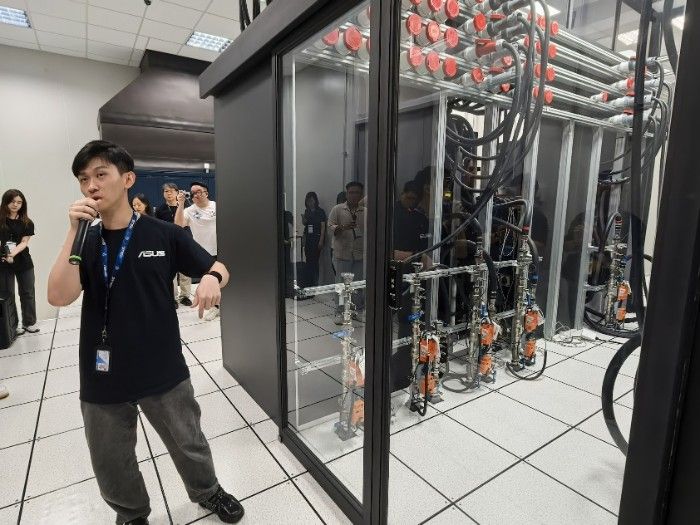
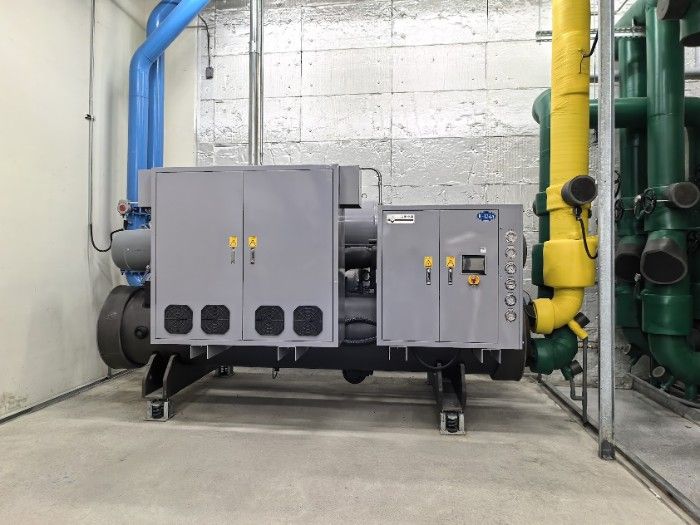
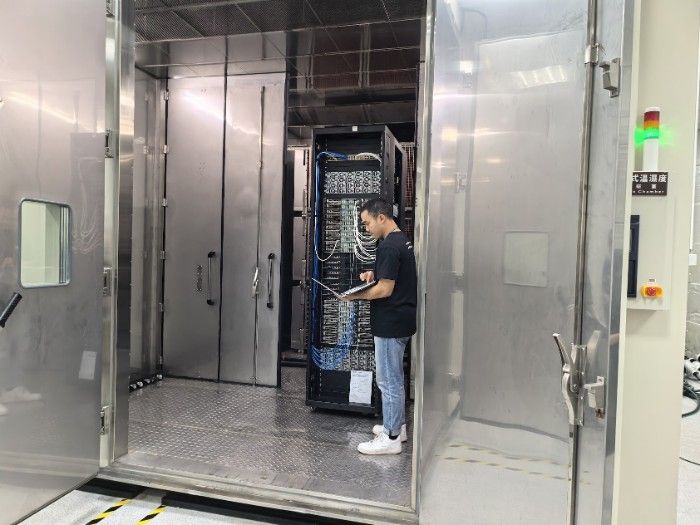
Asus's AI server test lab is built near an existing manufacturing plant, though I wasn't shown the latter. The team had clearly put a lot of thought into building the lab for validating AI servers. It comprises a dedicated chiller plant, pipes for liquid cooling, a small data hall for eight racks, and dedicated chambers for various tests.
While eight racks in a single data hall sounds small, the power requirements tell a different story. Eight of Nvidia's GB300 servers draw more than 1MW, or a million watts.
For comparison, Singtel's Bedok Data Centre in Singapore, currently slated for retirement, is a 3MW facility. Once Nvidia's upcoming Rubin Ultra arrives, that same 3MW will suffice for just five racks.
Not just a laptop brand
Though Asus has enjoyed undoubted success with consumer products globally, its roots sit solidly in the enterprise and data centre space too. It has 25 years in the server industry, involvement in high-performance computing (HPC) and AI projects across that time, a collaboration with Taiwan's National Centre for HPC, and the delivery of data centres in multiple countries.
Crucially, Asus is currently shipping various AI systems in volume. I've previously looked into its H200 GPU systems in an earlier article.
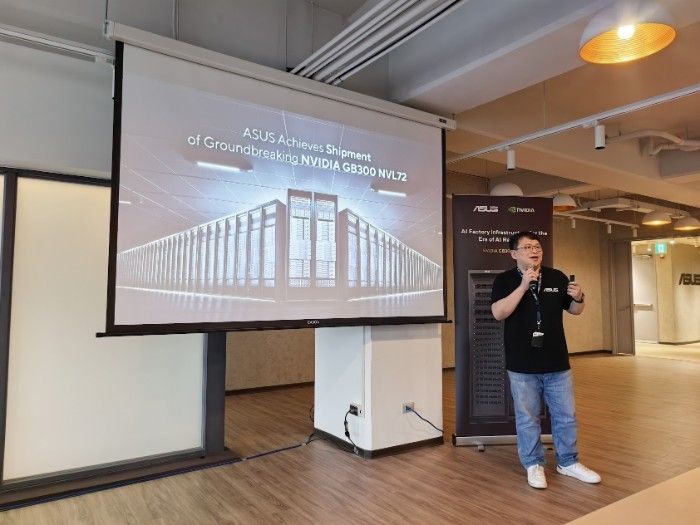
Joseph Lu, senior director of Asus's infrastructure business group, noted that Asus is the first server vendor to ship GB300 systems to end-customers, in September 2025. He says the company does 100% in-house engineering across the mechanical, electrical, software, and firmware layers.
The hardest part isn't the chips
I was naturally curious about the new GB300 systems Asus is shipping. When I asked, Joseph shared some of the design challenges, which mainly revolve around mechanical components.
It turns out that the sheer volume of cables that must be crammed into a confined, hot space is monumental. Throw in the liquid-cooling pipes that must be routed to GPUs and other key systems, and it becomes almost impossible.
And there's the risk of overbending those pipes, which can result in leaks. That's not something anyone wants to see with AI systems costing upward of US$3 million per rack. The chips may grab the headlines, but the real engineering battle is being fought over cables and cooling. Have you ever seen an AI server up close?