How data centre operators are reducing water consumption
Three methods for extending the usable life of every litre in a data centre.


Modern data centres are stressing water supplies. As governments mandate efficiency targets or even restrict new data centres, here's what operators are doing.
When I first met Mohammad Sherafatmand for coffee a year ago, I had no idea how much I didn't know about data centre water use. Since then, I've tried to educate myself. Here's some of what I've learned.
Lowering water consumption
When we talk about reducing water use in data centres, the conversation often revolves around the use of non-evaporative dry coolers. Of course, there is typically a trade-off in the form of higher energy consumption, and this also ignores existing data centres that are not outfitted with these systems.
For many data centres, a practical way to lower water consumption is by minimising blowdown. This is water that must be discarded as traces of minerals and impurities build up over time. Discarding it in a timely manner is vital; failure to do so can result in scale buildup, which can reduce cooling efficiency and even damage equipment.
There are ways to extend the lifespan of this water, though. Here are some methods that data centre operators use.
Chemicals as inhibitors
Chemical dosing can protect metal components from degradation, suppress microbial growth, or prevent mineral deposits from crystallising on heat exchange surfaces.
Selecting the right chemicals depends on factors such as dissolved solids, hardness, and pH level, as well as the cooling architecture itself, including the material of the water pipes used.
Improve quality of incoming water
The cleaner the incoming water, the slower impurities build up. Depending on the quality of a given location's municipal water, pre-treatment can improve its quality so that it can be used safely for longer.
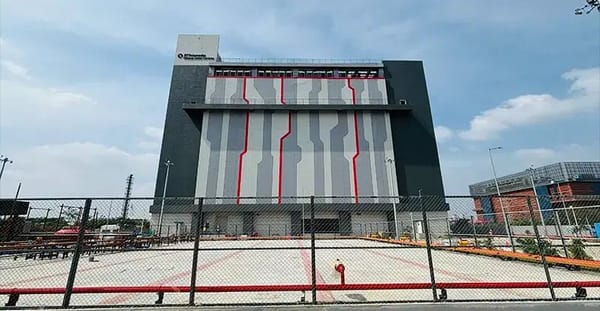
A water treatment plant can work too, which is what happened with Bridge Data Centre's MY07 facility in Johor. It is also possible to recover blowdown water through an on-site treatment plant, extending the life of water that would otherwise be discarded.
Filtration and electrochemical treatment
Beyond chemicals and pre-treatment, operators can actively remove contaminants while the system is running. This is done through side-stream filtration to continually remove suspended solids.
Another method is electrochemical treatment, which passes an electrical current through the water to disrupt scale formation and disinfect it, reducing microbial activity.
These methods work together to extend the usable life of every litre in the data centre, lowering water consumption without compromising reliability.