What four weeks of maxing out Fable 5 taught me
Subagents keep costs down while Fable does the architecting.

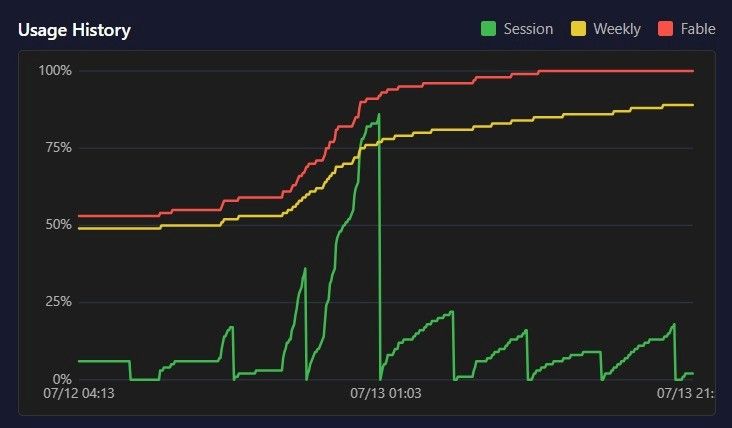
After maxing out Anthropic's Fable model on Claude Code several times, I wanted to share my thoughts on just how good it is.
It's been a wild ride with Fable 5: an abrupt ban, its return with tightened usage for monthly subscribers, an unexpected reset, and two deadline extensions.
Using Fable
I estimate I've maxed out my Fable use four times against my Claude Max 20x plan's weekly usage limits. For context, I used it to build and maintain a multi-user presentation app on Cloudflare, a complex web service with 200,000 lines of code, a small Win32 system tray utility, and a personal time planner app. Here are my thoughts.
What I built with it
Anthropic's greatest feat is undoubtedly its marketing, with widespread coverage of its Mythos family of AI models, from which the neutered Fable 5 comes.
Hype aside, Fable 5 is clearly better than Opus 4.8 for coding and analysis. Across a small handful of personal projects, I found it could come up with technical solutions Opus didn't, offer complete solutions without handholding, excel at complex and long-horizon challenges, and review code before crafting a multi-day plan to harden it.
In many ways, it delivered what each recent version of Opus did, just with slightly more smarts. Except it felt like three step changes instead of one.
The gap is real
There were complaints that Fable seems to offer the same level of capability that Opus did. That's true for rudimentary things, though I'd argue the same can be said of humans.
Your CEO probably can't clear the trash better or more efficiently than the average Joe. But you probably want his or her advice when it comes to solving challenging problems within their field of expertise.
From my experience, Fable was able to design, build, and test an entire app in one go from a single, admittedly detailed 3,000-word prompt, running for more than 12 hours to completion. So reserve its use for complex problems.
Let it delegate
One tip completely changed how I used Fable. It turns out Anthropic itself recommends using Fable with subagents, ideally letting it choose the appropriate AI model for each.
This trick ensured that precious Fable use is reserved for architecting, planning, and overseeing, while cheaper Opus, Sonnet, or even Haiku subagents do the actual work. The result is a lot more work done.
Looking ahead, I foresee less capable, cheaper AI models finding their place as frontier models climb in cost. The AI giants today are subsidising use with subscription plans that offer substantially more usage than their API rates charge for. I don't think this state of affairs will last forever.
Though GPT-5.6 might yet force Anthropic's hand. For now, at least.