What actually makes a data centre a data centre?
A decade of site visits, distilled into three constants.

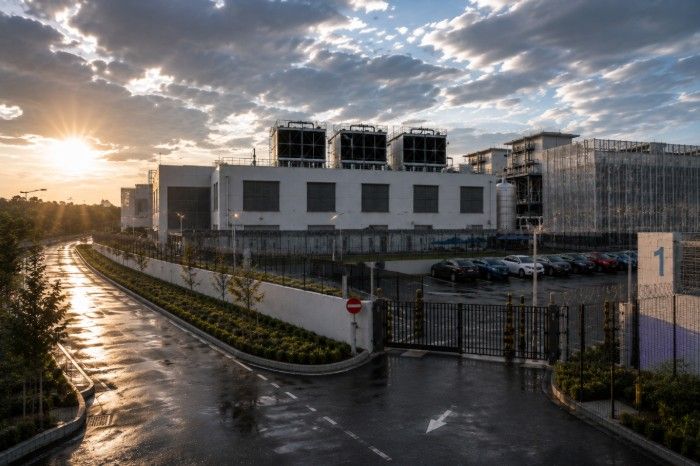
What makes a data centre? I confronted that question during my recent "Data Centres 101" series with the new editors at w.media. Here's what I eventually shared.
As with every field experiencing rapid change, it can be challenging to precisely define what a data centre is. Yet some characteristics remain unchanging, whatever the workload or the generation of hardware sitting in the racks.
What follows is a small snapshot of what I've gleaned from a decade of writing about data centres.
Power
All data centres need power, and they are almost always powered from the grid, with two or more power substations for resilience.
What if the grid falters, or even fails completely, though? To address that, data centres come with their own power backup systems: an Uninterruptible Power Supply (UPS), diesel generators, and fuel storage to keep those generators running.
Once you have high power loading, there is the non-zero risk of fire, which calls for advanced fire detection and firefighting systems. Detection covers smoke, heat, flame, and gas. Suppression comes in several forms, including halocarbon agents that work by heat absorption, inert gas agents that work by displacing oxygen, and water in the form of sprinklers or mist.
One point worth dwelling on: continuously applied water is the only effective suppression medium for lithium-ion fires. And lithium-ion UPS systems are very popular in data centres these days.
Cooling
All that power has to go somewhere. IT systems use a lot of it and generate significant heat, which must be removed to keep them operating reliably and to prevent damage.
Operating within data centres is specialised plant machinery designed to shift that heat, chiefly cooling towers and chillers. These generate chilled water, which is then piped across the facility and used to keep IT systems cool. The methods are generally air-cooling, direct-to-chip liquid cooling, and immersion cooling, with the latter two available in single-phase or two-phase variants.
One pointer people often forget is that air-cooled systems benefit enormously from containment to ensure the flow of air, as I've written about previously.
Security
Keeping the machines running is one thing. Keeping people away from them is another.
Last month, I wrote about an old data centre heist in which 80 servers were stolen in broad daylight. I doubt it could happen today, given the multiple layers of security I've heard of or seen: anti-ram gates, high-security fencing, mantraps in the security lobby, multiple security zones behind locked doors, underfloor laser sensors, and IP cameras throughout.
Of course, one could argue that new threats abound. If anything, recent cases of military drones being launched against data centres showed just how vulnerable they can be.
The learning journey
There is a lot I couldn't fit in here: renewables, connectivity, new developments, and more. Each deserves its own treatment.
The fundamentals, though, are the part that holds. Power, cooling, and security are what every facility comes back to, however the racks inside them change. The learning journey continues for me.