Websites are getting uglier, and it's on purpose
Three lessons from my panel at Klaviyo's K:SGP in Singapore


Websites are getting uglier, and it's on purpose. That was one of several things I learned from my delightful panel at Klaviyo's inaugural K:SGP conference in Singapore last week.
AI is remaking everything, and marketing is no exception. What struck me was how top marketers are adapting to it, with real verve and creativity.
Back to the future
Remember the days of ugly, text-only websites? We've come a long way since then: first the Flash-era splash pages, then the full-screen hero visuals. And now we're heading back to text.
I exaggerate, but only slightly. Text is indeed back in vogue, if only to satiate the AI search engines. Ultimately, it's about meeting customers where they are.

From searching to asking
The panel at Klaviyo's K:SGP conference in Singapore. Photo: Klaviyo.
Discovery has changed. Customers no longer type keywords into Google and browse the results. They ask ChatGPT what to buy, and they arrive at your site already informed.
As Steven Ang of Plaud describes it: "People are no longer searching; people are actually asking." Old assumptions are quietly breaking as a result. The welcome email, he noted, is no longer the first touchpoint. It's probably the second or third.
That means brands have to make themselves legible to AI. FILA took this to heart. SangUn Jung shared how the brand deliberately stripped its flashy, image-led pages back to structured text, so that AI could read and cite them.
The goal isn't immediate sales from AI traffic. It's to be found and understood at the very start of the journey. Stakeholders resisted at first, though not for long. In his words: "the AI is just there now."
Bye to IT tickets
With smaller teams and shrinking budgets, AI has become a multiplier. Tanya Mar of Dermalogica builds AI-generated product lineup pages from a single voice note, run through an AI trained on the brand's rules.
At FILA, SangUn no longer waits on IT tickets. His team writes its own scripts to analyse the website, and in doing so discovered that performance-shoe buyers read up on the tech, while lifestyle buyers care about size and fit.
AI can't be the brain
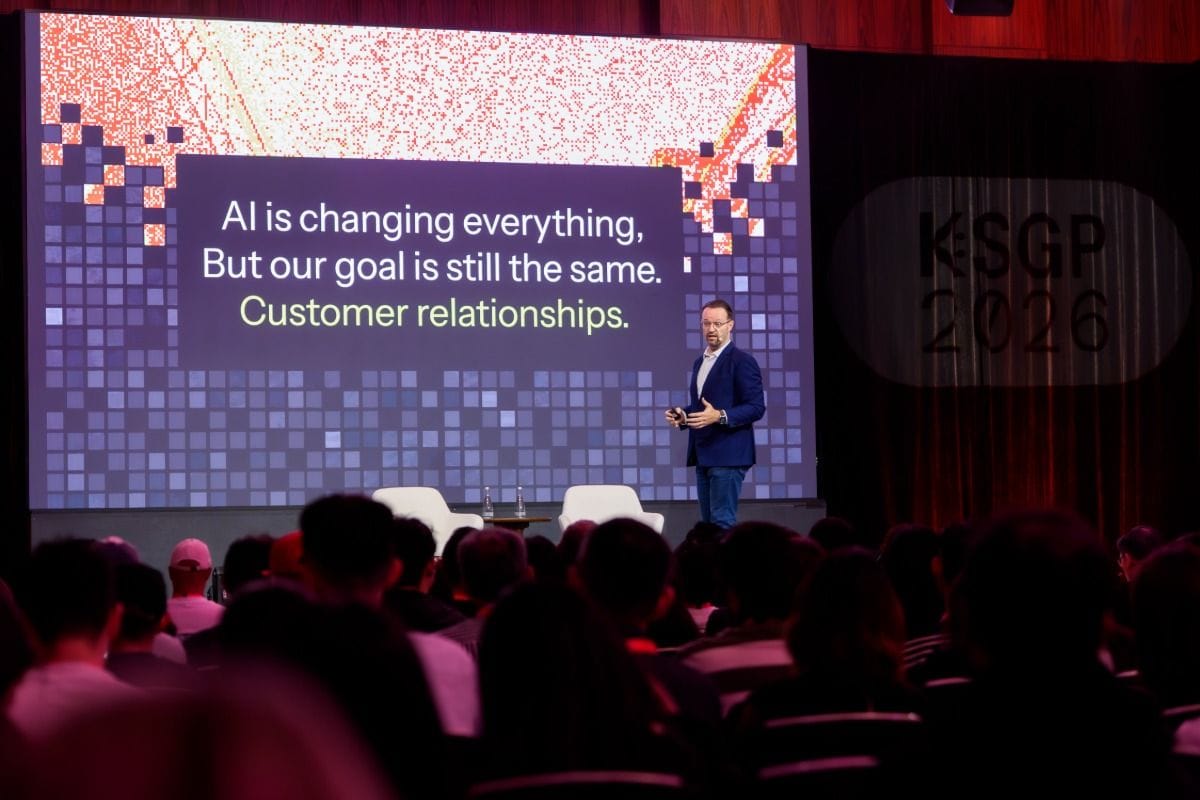
Speakers at K:SGP, Klaviyo's first conference in Singapore. Photo: Klaviyo.
For all the automation, humans remain at the centre. That's especially true when a customer is unhappy. Steven shared how Plaud routes its unhappiest customers straight to a human.
Knowing your customers matters more than ever, too. Tanya pointed out an opportunity most brands are missing: "Customers are volunteering their insights in chats and we're not collecting those."
Ultimately, people still set the direction. Plaud's monthly recap email is now tailored to each user's lifecycle stage, so no two people get the same recommendation. A team member built it with AI as a thinking partner; the team then reviewed it and set it live. AI speeds up the work, but it doesn't change the thinking behind it.
Or as Klaviyo's chief marketing officer Jamie Domenici put it: marketers are shifting from doing to directing. They set the outcome and the guardrails, then review what the AI produces.
Uglier websites included.