The water problem data centres can't easily solve
There are ways to reduce water use. But there are trade-offs.

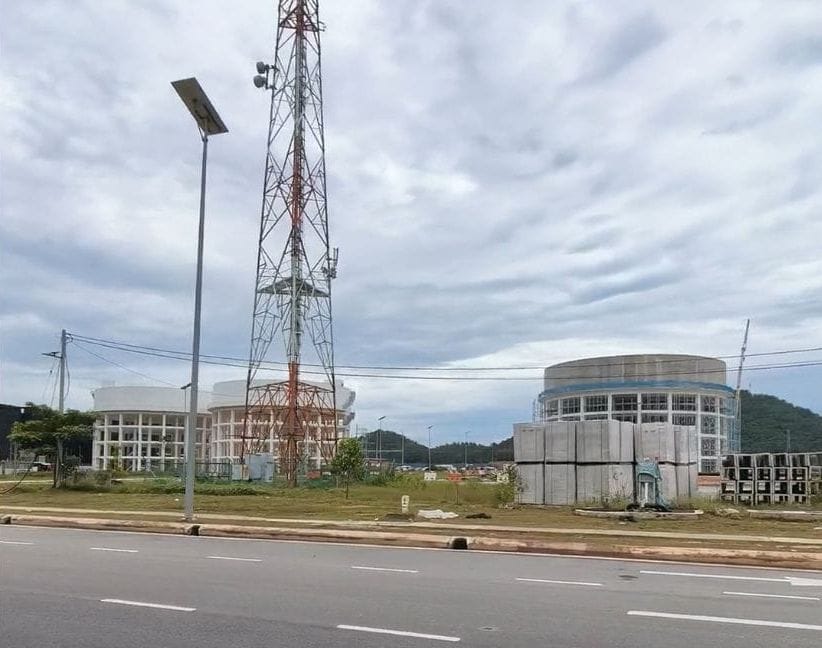
Walk into a data centre campus and you will invariably see massive storage tanks for water. Here's why data centres are so thirsty and why this won't stop overnight.
How data centres lose water
Data centres rely heavily on water. Inside, a vast network of pipes routes water through cooling towers, chillers, pumps, heat exchangers, and computer room air handlers.
Water is lost through two primary ways: evaporative cooling to expel heat, and blowdown, where water is discarded as minerals build up. This isn't new. What is new is the scale of data centres. Data centres of 5-10MW were considered large a decade ago. Today, data centre campuses are topping hundreds of megawatts.
Even allowing for better economies of scale and increased efficiency with new systems, a 300MW data centre would consume almost 30 times the water of a 10MW facility.
And it is impacting communities. In Johor, there is a temporary water moratorium for new data centres until 2027, as the state races to divert water and build new water treatment plants.
Cutting down water use
Are there ways to reduce water or even do without it? There are. But there are trade-offs. For one, dry coolers reject heat without water, but this typically comes at the cost of higher energy consumption compared with evaporative cooling systems.
Microsoft has talked about its zero-water evaporation design for data centres. I couldn't find technical details for it, but what I found suggests using elevated water temperatures and direct-to-chip cooling for everything, which costs more.
More tellingly, a New York Times report earlier this week noted that water consumption by Microsoft data centres will continue to rise as it builds new data centres. So it's clearly not using this system for all its new facilities.
Crucially, it's not possible to reduce water use significantly without retrofitting existing data centres, a costly endeavour that few operators will embark on.
Reducing blowdown
Another way to save water is to minimise blowdown water. This is water that must be discarded as minute traces of minerals and impurities build up as water evaporates.
Failure to do that in a timely manner can result in scale buildup, which can reduce cooling efficiency and ultimately damage equipment.
What can data centre operators do on this front? They can treat incoming water to improve its quality, use chemicals as inhibitors, or employ filtration and other treatments.
Note that this presupposes the continued use of water, albeit with less wastage for much better water usage efficiency (WUE).
I'll talk more about the above in another post.