The Sustainable Data Centre Park: circularity as an industrial strategy
A new report makes the case for industrial circularity.

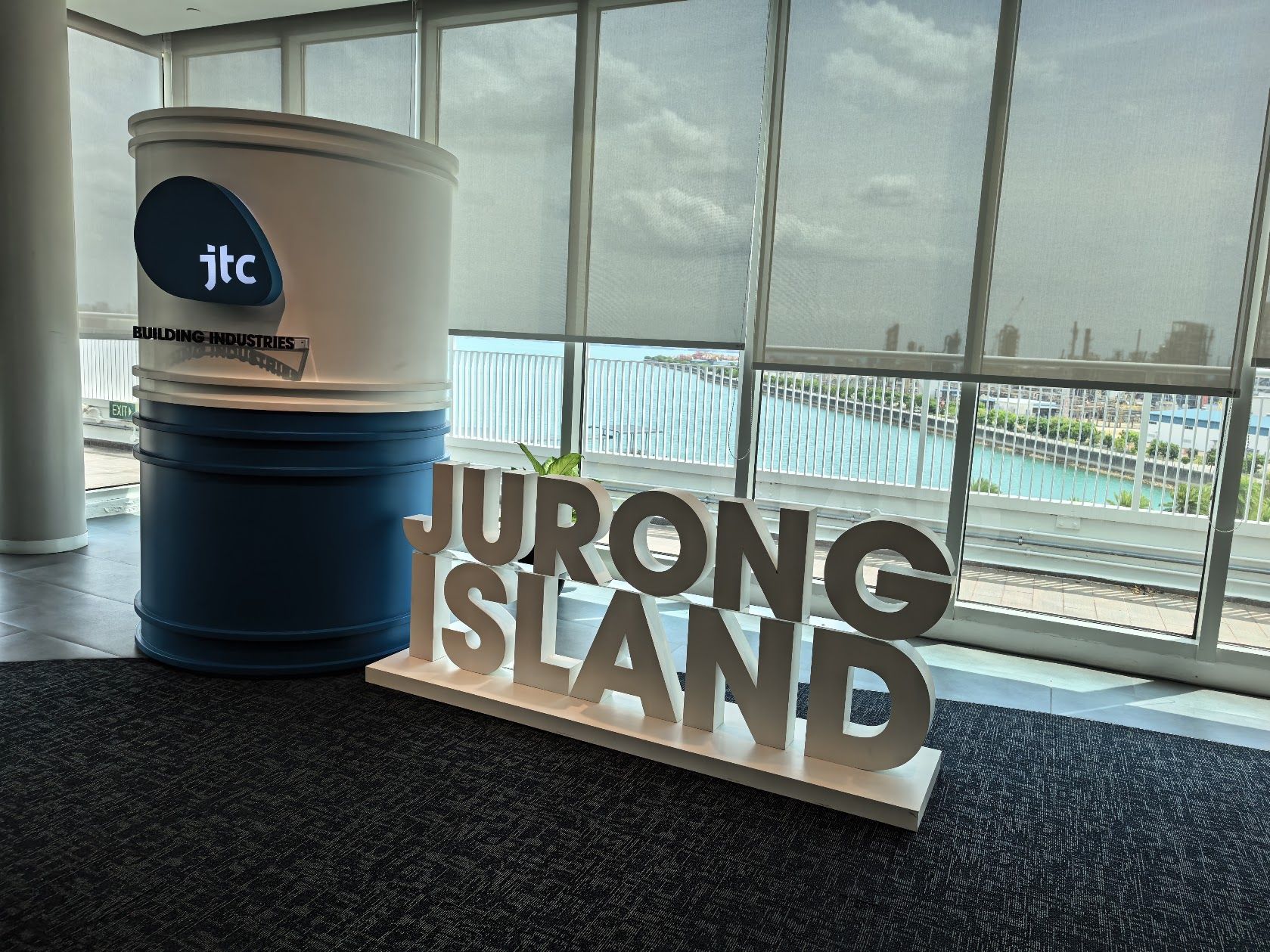
Singapore stands at an inflection point. Demand for AI data centres is sharp, the need to decarbonise is real, and the two pull in opposite directions. So what now? The answer could well lie with Jurong Island.
I've written a fair bit about Jurong Island, including a feature for w.media's CDC Magazine that JTC republished on its website. But things don't stay static.
A report by Iron Mountain Data Centers and Baringa lays out additional detail on how data centres can serve as enablers of circular, low-carbon growth. Here's what it means.
AI and data centres
Singapore is a data centre hub, an endeavour at least two decades in the making. It now has 1.4GW of data centres and a dense network of subsea cables that far belies its size.
The renaissance of AI in the form of generative AI sharply increased global demand for capacity, kicking off a wave of massive new builds. And as we keep finding new uses for AI, the pressure shows no sign of abating.
Indeed, as the report noted, the fundamentals that defined the last era of industrial growth are changing. Land is constrained, electricity demand is growing, and emissions need to come down. All three at once.
A low-carbon data centre ecosystem
Data centres, with their high demand for electricity, are on a collision course with a finite carbon budget. That places hard limits on how far such systems can scale.
In my previous post, I wrote about plans to redevelop Jurong Island as a sustainability hub, complete with solar power deployments, energy storage systems and hydrogen-ready power plants.
But what if data centres could be folded into that transformation, with a low-carbon, AI-ready ecosystem designed around them rather than bolted on afterwards? That question is how Jurong Island's Sustainable Data Centre Park came into being.
Blueprint for the future
Among other things, the report highlighted how circularity could be applied on Jurong Island through an integrated cooling ecosystem. It rests on three moves: reusing liquefied natural gas (LNG) cold energy to cool data centres, storing and redistributing thermal energy, and developing shared district cooling networks.
The logic starts with how Singapore gets its power. The country relies mainly on natural gas for electricity, most of which is shipped in as LNG. The process of regasification, taking the fuel from -161°C to around 20°C, releases 'cold' energy that is usually discarded.
Proper circularity would see that cold harvested to cool data centres instead. In practice, it could be stored and redistributed through shared district cooling networks, so the benefit isn't confined to whichever facility happens to sit closest to the terminal.
Finally, data centres could serve as the catalyst for low-carbon fuel use and development, given that DC-CFA2 mandates up to 50% use. Aggregate enough demand and, with luck, pricing becomes more competitive over time.
Greater than the sum of its parts
Put the pieces together and Jurong Island delivers an outcome larger than any one of them on its own: waste cold becomes cooling, cooling becomes shared infrastructure, and demand for low-carbon fuel becomes a market. The question is whether Singapore can assemble it fast enough to matter for the AI buildout already underway.