Singapore wants to do the impossible again
Three insights from the minister's five-year energy infrastructure plan.

There's been a furore over energy these past few days. I listened to Minister Tan See Leng's speech at the Singapore International Energy Week (SIEW) this morning, and here are three insights that haven't made any headlines.
On Saturday, Indonesia abruptly reduced its gas pipeline exports to Singapore. The actual amount is very small, though what it portends is massive. I'm not talking geopolitics today, however.
In his keynote on Singapore's five-year energy infrastructure plan, Minister Tan even made a mention of data centres. Here's what matters.
To do the impossible. Again
Developing renewables is a herculean feat, even for modern-day Singapore. I was surprised that Minister Tan spoke so plainly about the challenges, including those facing hydrogen, once a darling of green energy. There are losses at every stage, from production to transportation to use. Global development has been slower than expected, and that in turn translates to higher cost.
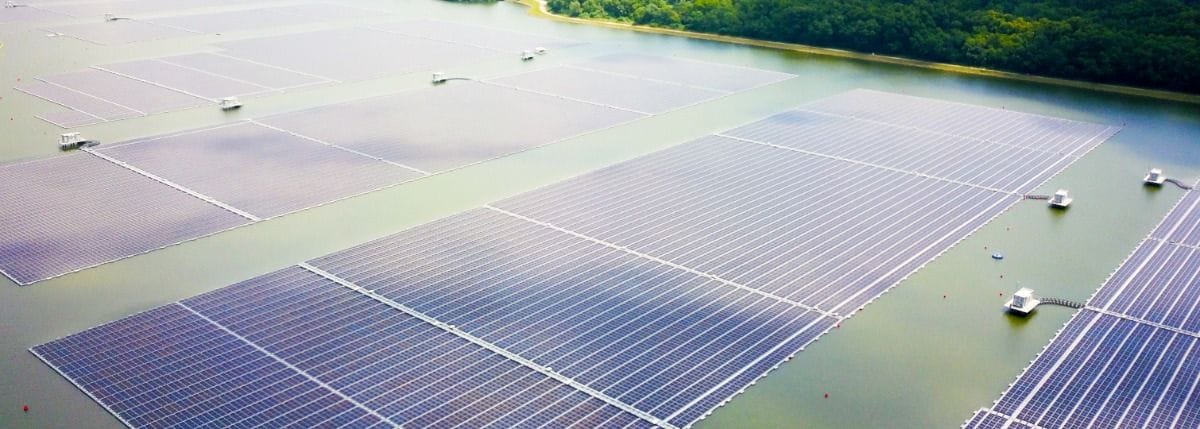
Singapore is exploring all options. These include cross-border electricity imports, upgrading the power transmission network, building five more gas power plants in five years, pushing the solar target up again from 3GWp to 4GWp, and studying a third liquefied natural gas (LNG) terminal on Tekong.
Implicit in that last item is that while Singapore aims to meet its net-zero obligations, it won't transition at any cost.
The short version: the going will be hard, but Singapore thinks it can replicate its success in water sufficiency with energy.
Geothermal is no silver bullet
I learned two things about geothermal today. The first is that a preliminary report from a study found Singapore's technical geothermal potential to be huge: 60 times its annual power consumption.
The second is that there are significant risks inherent in tapping geothermal energy. I read up on it and realised geothermal can cause induced earthquakes, water contamination, and ground subsidence.
There are ways around these, but they mostly involve not drilling anywhere close to population centres. In Singapore, that would be challenging indeed.
All roads lead to nuclear
Minister Tan spoke about initiatives to develop the competency Singapore needs to deploy nuclear power, while emphasising that no decision has been made.
When I add everything up, however, it's clear to me that nuclear power in Singapore is only a matter of when. My rationale is threefold. There is the need for baseload power alongside renewables. Malaysia and Indonesia both have plans for nuclear. And it serves as a hedge against hydrogen's slow development.
Make no mistake: incredible challenges stand in the way of nuclear, though some might yet be alleviated by newer generations of reactors.
And yes, the semiconductor and data centre industries were mentioned, both for their desirability and for their need of electricity.
The question, then, is whether Singapore can pull it off. It has done the impossible before.