Samsung wants to take data centres out to sea
Samsung's offshore bet on seawater cooling and closed loops.

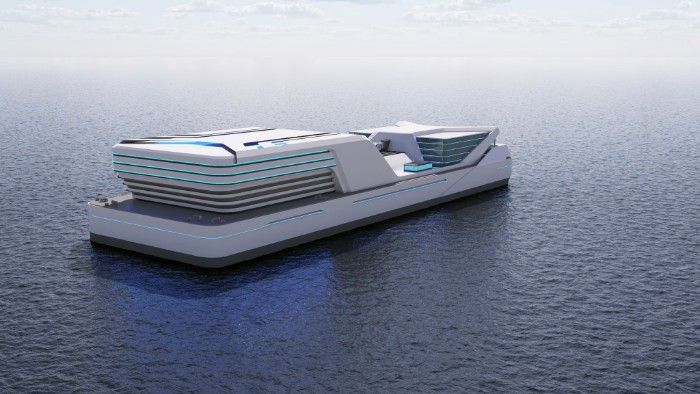
First land, then space. Now the race to build data centres is moving out to sea. Samsung wants to take them there. The reason is simple enough: the finite availability of water for cooling.
Data centres on water
It seems that everyone around the world is rushing to build more data centres. But the rapid pace and the massive capacities involved are straining limited resources such as water and the power grid.
Samsung is now inching closer to building its floating data centre, according to a report last week that Samsung Heavy Industries is set to sign an engineering agreement with data centre developer Mousterian Corporation (M3).
Its design, according to various media reports, will see seawater pumped through a closed-loop heat exchanger system and then expelled. For operation at sea, the design also integrates an onboard power generation system, which means the vessel doesn't depend on a shore connection for its electricity.
Everything remains conceptual, though. No customer contract for a completed vessel has been publicly announced.
Other floating data centres
Samsung is hardly the first with this concept. Nautilus Data Technologies has operated a 6.5MW floating data centre at the Port of Stockton, California since 2021, with a reported PUE of 1.15.
Closer to home, Keppel Data Centres quietly confirmed in a business update earlier this year that construction of its floating, nearshore data centre in Singapore had started in Q1, after years of talking about it. And if I heard correctly, it is already fully subscribed.
Elsewhere, Japan's Mitsui OSK Lines and Hitachi are planning a ship-conversion project targeting a 2027 deployment. What sets Samsung apart is scale: its 50MW design is among the largest capacities yet proposed for a floating data centre.
Challenges at sea
Ambition aside, floating data centres face several challenges. For one, offshore environments expose servers to a unique mix of vibration, high-salinity air, and rapid fluctuations in humidity.
Crucially, standard vibration ratings for IT hardware likely don't cover the low-frequency platform and wave periods that characterise an offshore deployment, according to another source I read. Hardware qualified for a data hall on land isn't necessarily qualified for a hull at sea.
Then there's the water itself. Saltwater is corrosive. Biofouling, which occurs when marine organisms such as algae, barnacles and tube worms attach to submerged surfaces, poses its own set of problems for anything floating.
None of this has stopped Samsung from assembling an entire ecosystem of partners to chip away at the difficulties. It is working with Supermicro, for instance, to validate AI server infrastructure in marine environments.
So will floating data centres take off? My own concern is a different one: the lack of renewable power options for deployments that aren't nearshore.