Are data centres to blame for Batam's water shortage?
Taps ran dry at home while water kept flowing to servers.

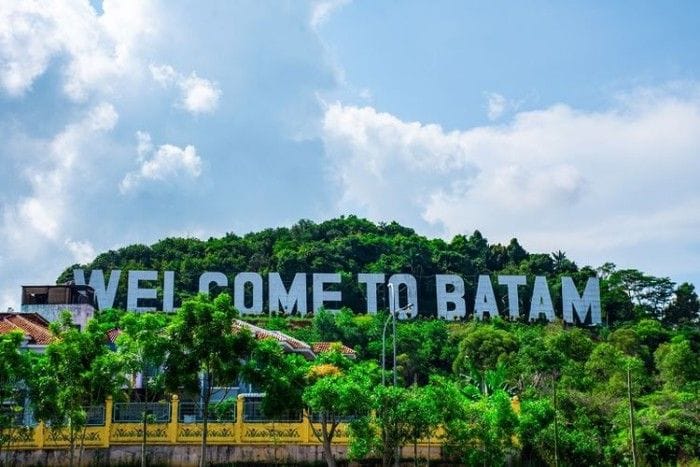
This week, protesting Batam residents descended on the management office of Nongsa SEZ after their water supply was cut. Here's what happened.
Apparently, this wasn't the first time residents had staged rallies at Nongsa SEZ. While some reports cited "hundreds" of demonstrators, a source told me it was "a few dozen", and that they stayed outside the perimeter.
Water for servers, not homes
Nongsa Digital Park (NDP) in Batam City is the scene of a fast-growing data centre cluster. It currently hosts more than a dozen data centres, though just a small handful are operational so far.
The protestors took action after supplies of clean water to residential areas around Nongsa SEZ were cut off. Their discontent stems from how water continued to flow to the data centres inside the SEZ even as their own taps ran dry.
According to media reports, water supply to these residents was drastically reduced a week prior, before stopping entirely from last Saturday until Monday. Other residential areas are also understood to have suffered from water shortages recently.
A reservoir in crisis
So were data centres the cause of the shortages? From my understanding, the water used by data centres in the Nongsa SEZ comes from Duriangkang Reservoir, delivered through a special pipeline built by BP Batam.
Residential areas in Nongsa, on the other hand, draw from Nongsa Reservoir, which is currently experiencing a water crisis because of both low rainfall and demand exceeding supply. In other words, homes and data centres are supplied from different sources.
Water operator PT Air Batam Hilir (ABH) is understood to be working on a new pipeline from Duriangkang to supply the residential areas. It is not clear how long that would take.
From my quick research, Batam does not currently have enough reservoir capacity to comfortably meet all its water needs, and the gap is widening. It turns out that a water crisis has long been predicted. According to Ahmad Dahlan, Batam's mayor from 2006 to 2016, the island's clean water could only support one million residents. Today, Batam has more than 1.3 million.
An easy target
Sentiment towards data centres is at a global low. Invariably, this means blame often shifts automatically to data centres, regardless of whether they are in fact at fault.
Yet the scarcity of water in Batam is serious, and it does mean that operators considering the island must think much further about their resource use.
Finally, Nongsa isn't the only location for data centres in Batam. Projects have been earmarked for Kabil Industrial Estate, Nongsa, Tembesi Industrial Estate and Batam Centre, with most of these facilities either under construction or still in negotiations.
Data centres didn't cause Batam's water crisis. But they've arrived in the middle of one.