The real bottleneck in data centre builds isn't hardware
Two lessons from a Siemens electrification insider on building faster.

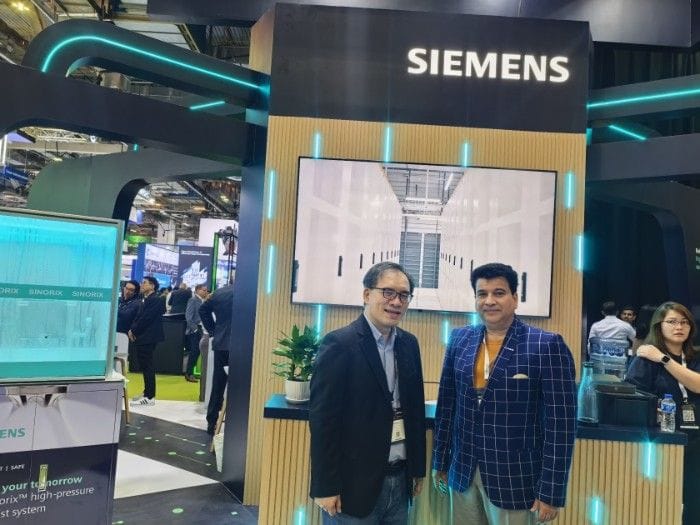
50% more data centre projects. Half the lead time. An insider from Siemens' electrification business told me how his team copes, and how operators can build faster.
Data centre build speed
You know the story: more data centres are being built than ever before, and construction timelines have shrunk dramatically. Where builds once took years, data centres are increasingly delivered in 12 months or less.
But getting a data centre operational isn't just about building faster or launching more parallel workstreams. Key components such as power distribution and critical power systems can be a bottleneck too. Good planning is needed to manage the lead time of key components, and to align delivery times with the construction schedule.
The insider told me the number of projects in Malaysia has grown by 50% while lead times have halved. In response, Siemens now delivers electrification equipment in much less time than before. So what can data centre operators that hope to build faster do? Here are two things I learned from him.
The human side of data centres
Surprisingly, the real constraint often isn't hardware but people: the project managers, engineers, and service teams tasked with delivering and commissioning a data centre project. It makes sense, because specialised skillsets take time to develop.
There are ways to address this. One is to pair new engineers with veterans for quicker learning. Another is to work with partners to fill the gap.
Crucially, experience compounds. The team that completed phase one is now far better equipped to work on phase two, which means things will only get better.
Stick with tried-and-tested
Changing the design after production has started is a surefire way to cause delays. Making changes during the testing or delivery phase will likewise push the energisation date further out.
The suggestion? Where possible, reuse the designs from an earlier phase. Better still, create a digital twin of the data hall, which lets you build at twice the speed by simulating and testing before building.
This is not to say data centre operators cannot customise. If a non-standard design is required, the advice is to bring the vendor in early, so the changes can be baked into the offer and drawings before kickoff.
More growth ahead
Given recent news headlines about restrictions on data centres in the region, one would be forgiven for concluding that the ecosystem is slowing down. Not necessarily.
Some existing data centres have already secured approvals to expand their capacity. Others are simply still under construction. And as governments review and align data centre legislation, and as power grids and utilities are upgraded, I expect data centre construction to continue.
After all, with lead times halved and more projects than ever in the pipeline, there's little slack left for poor planning.