Singapore launches world-first liquid cooling standard for tropical data centres
Leaks, corrosion, and biofilms leave no room for mistakes.

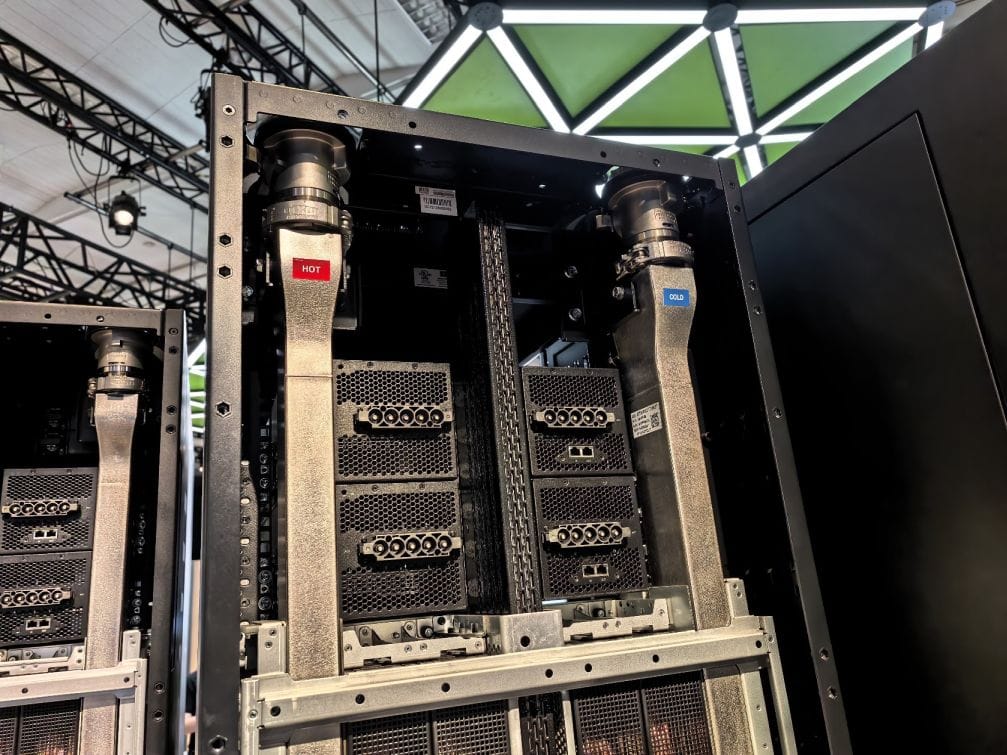
Singapore has launched the world's first standard for liquid cooling in tropical data centres, built with AI workloads in mind.
This is a busy season for Singapore's IMDA. Just days after announcing the CFA2 winners for 200MW of new data centres, it jointly announced a new liquid cooling standard with EnterpriseSG.
When liquid cooling goes wrong
You would have heard about liquid cooling, which pushes a liquid coolant all the way to the server racks to keep compute systems cool. Compared with air cooling, it is considerably more efficient.
But liquid cooling poses different challenges, including the non-zero risk of leaks.
Last year, I wrote about a leak at a Southeast Asia data centre that took out a small GPU cluster. In one video that I saw, employees were trying to squeegee away a thick layer of water in the data hall. Another showed water pouring out of the back of a coolant distribution unit (CDU), the pipe having either burst or come loose.
Why a standard, and why now
That incident highlights how liquid cooling is still relatively new in the region. The expertise exists, but it is often sequestered within certain hyperscalers or large cloud operators.
Then there are the liquid-related operational considerations, such as potential corrosion in equipment, microbial growth, and biofilms in the cooling fluid, to name just a few. It isn't rocket science, but it comes close. And operators simply can't afford any mistakes at all.
This is where the Singapore Standard (SS) 726:2026 for liquid cooling in tropical data centres comes into the picture. It was developed by a working group of local data centre operators, consultants, solutions providers, and academic researchers. I asked, and PS Lee confirmed that he is the convenor for the standard.
What SS 726:2026 covers
According to the release, SS 726:2026 will offer guidance on choosing a suitable CDU, integrating liquid cooling with existing air-cooling facilities, risk management and safe operations, and practical guidelines on system design.
There are, of course, existing standards out there. However, they can be confusing to operators and are not necessarily written for tropical climates. Some are also vendor specific.
Ultimately, the new standard should offer clear guidance as more data centre operators turn to liquid cooling, including those looking to run hybrid air and liquid cooling deployments in the region. Like previous Singapore Standards, it is available for purchase at the Singapore Standards e-shop.