Lenovo unveils hybrid AI strategy at CES 2026
AI is moving beyond chatbots. Lenovo is positioning for what comes next.

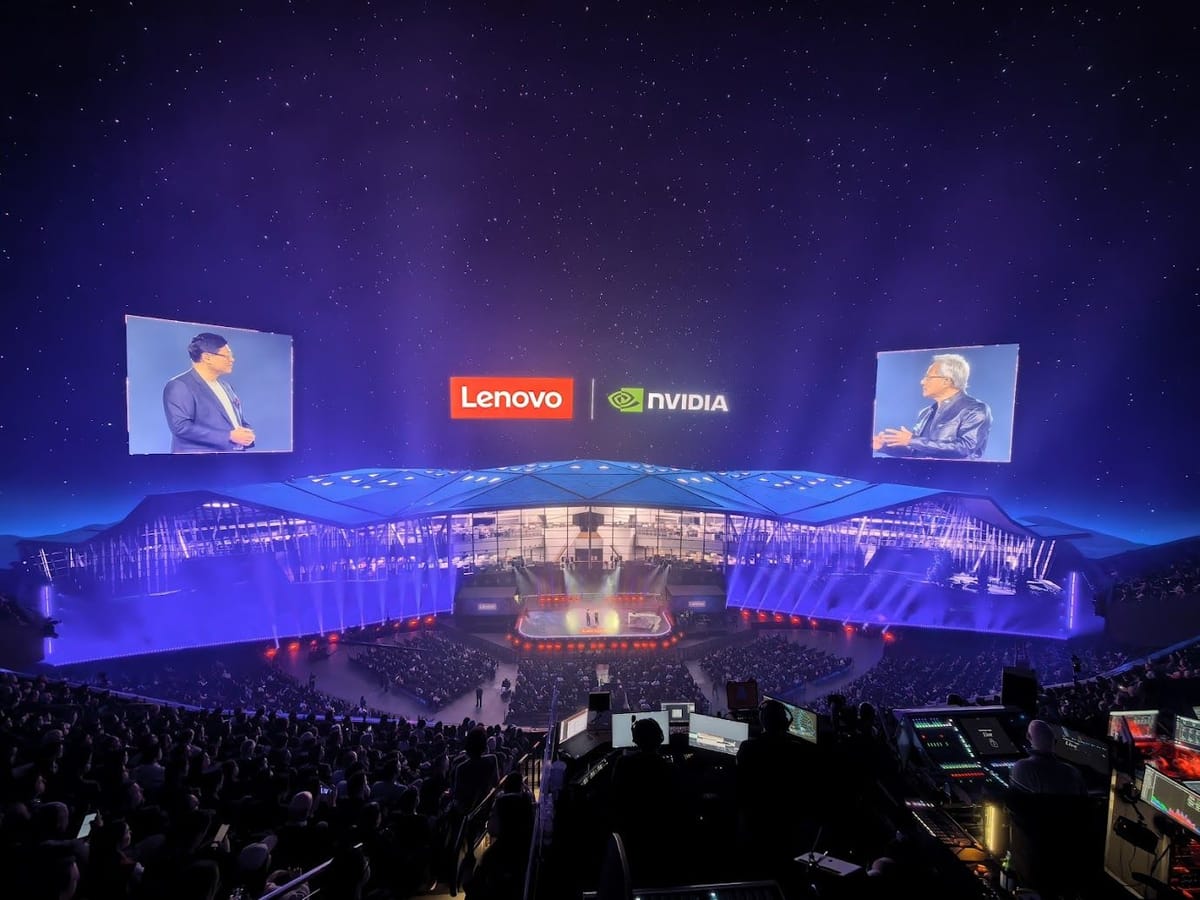
At the iconic Sphere on Tuesday, Lenovo unveiled multiple products under the radiance of the panoramic LED wall the size of several football fields.
I attended Lenovo's CES keynote at Sphere today. Jet-lagged as I was, it was a phenomenal experience. Here's the technology behind it, and what the tech giant announced.
The technology
At 73 metres high, Sphere has the world's highest-resolution interior LED screen that wraps 360 degrees up, over, and around the audience. Its 16K by 16K resolution gives it 256 million pixels.
Hidden behind the sound-permeable LED panels are 167,000 individual transducers with beamforming, which allows the delivery of pinpoint sound to individual seats.
To generate the breathtaking images, over two dozen 4K feeds are stitched together in real time at 60fps. This is powered by over 400 Lenovo servers containing AMD EPYC and Nvidia chips.
The level of detail was almost overwhelming; some night-to-day scene transitions actually made my eyes water. You'll have to look at the photos for yourself.
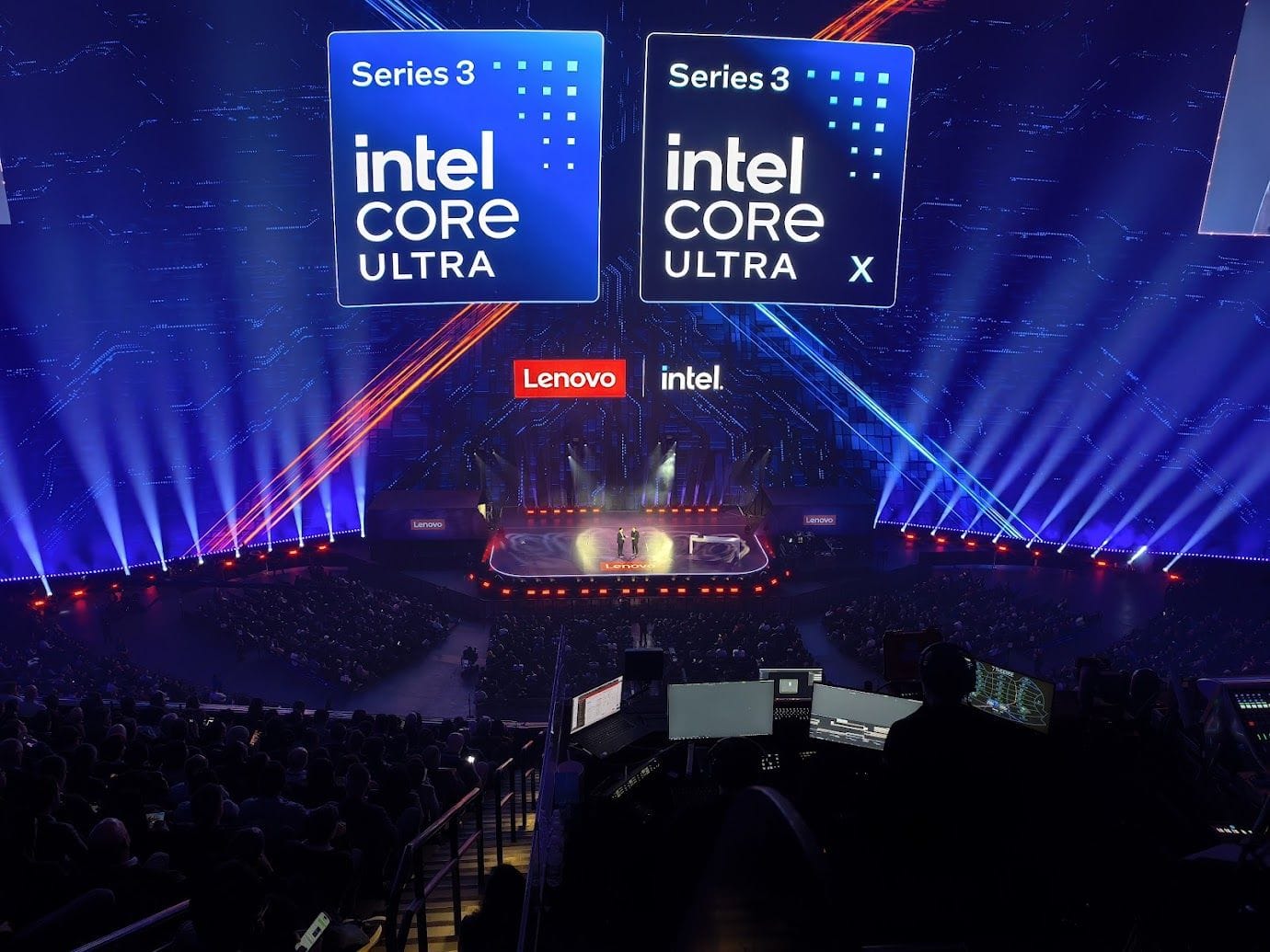
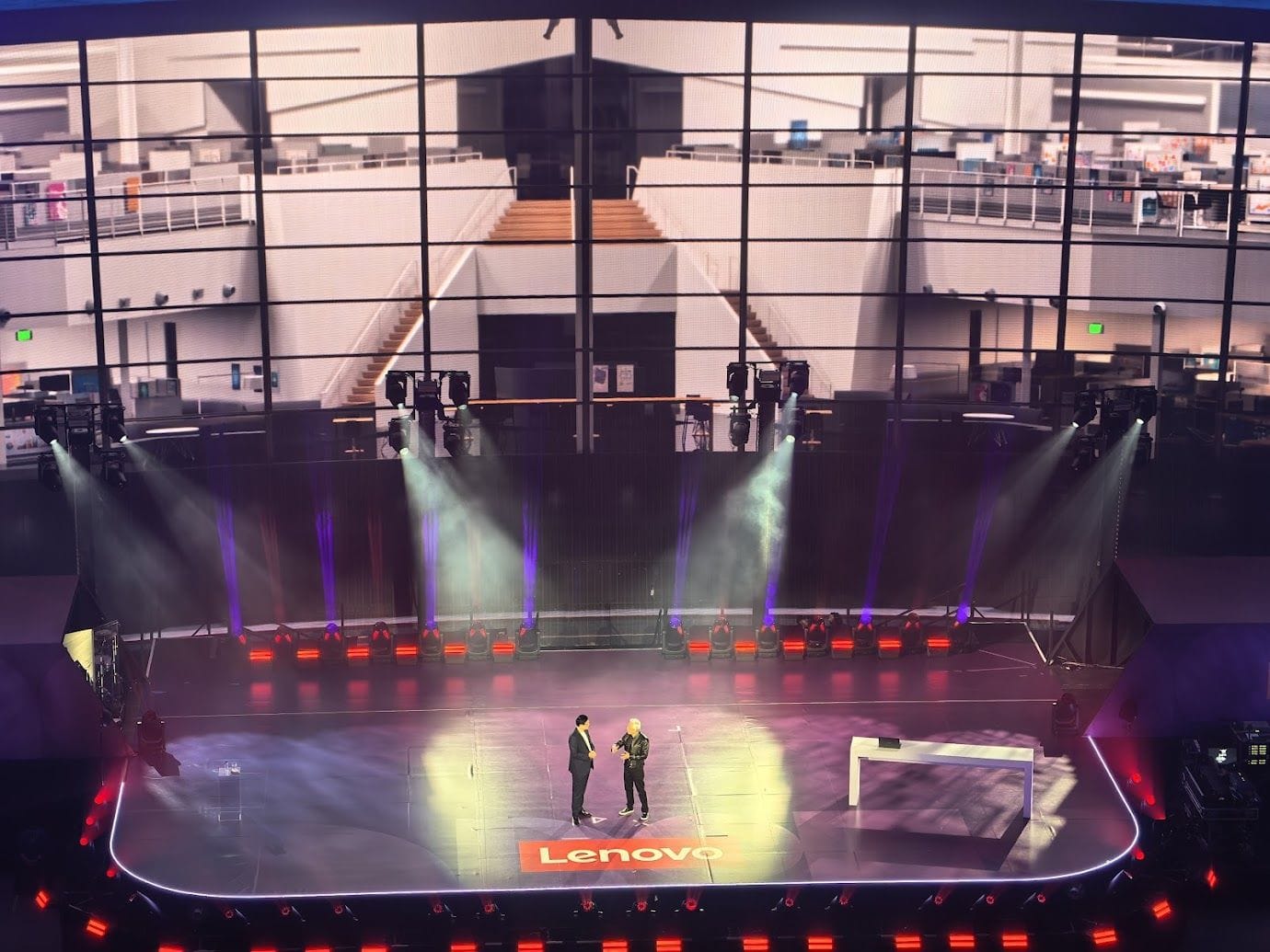
Photo Credit: Paul Mah.
Hybrid AI at scale
What did Lenovo announce? You aren't far off if you thought "AI." According to CEO Yuanqing Yang, AI is moving beyond chatbots, writing code, or even producing images or videos.
Instead, it is becoming the core platform of computing and business, even as users move away from generic, public models to "personal AI" tuned to an individual's data, or demarcated enterprise deployments.
In his view, the world will increasingly use "hybrid AI," which sees a combination of public frontier models, personal AI, and private enterprise deployments.
Hybrid AI underpins Lenovo's strategy across its entire product range and business groups.
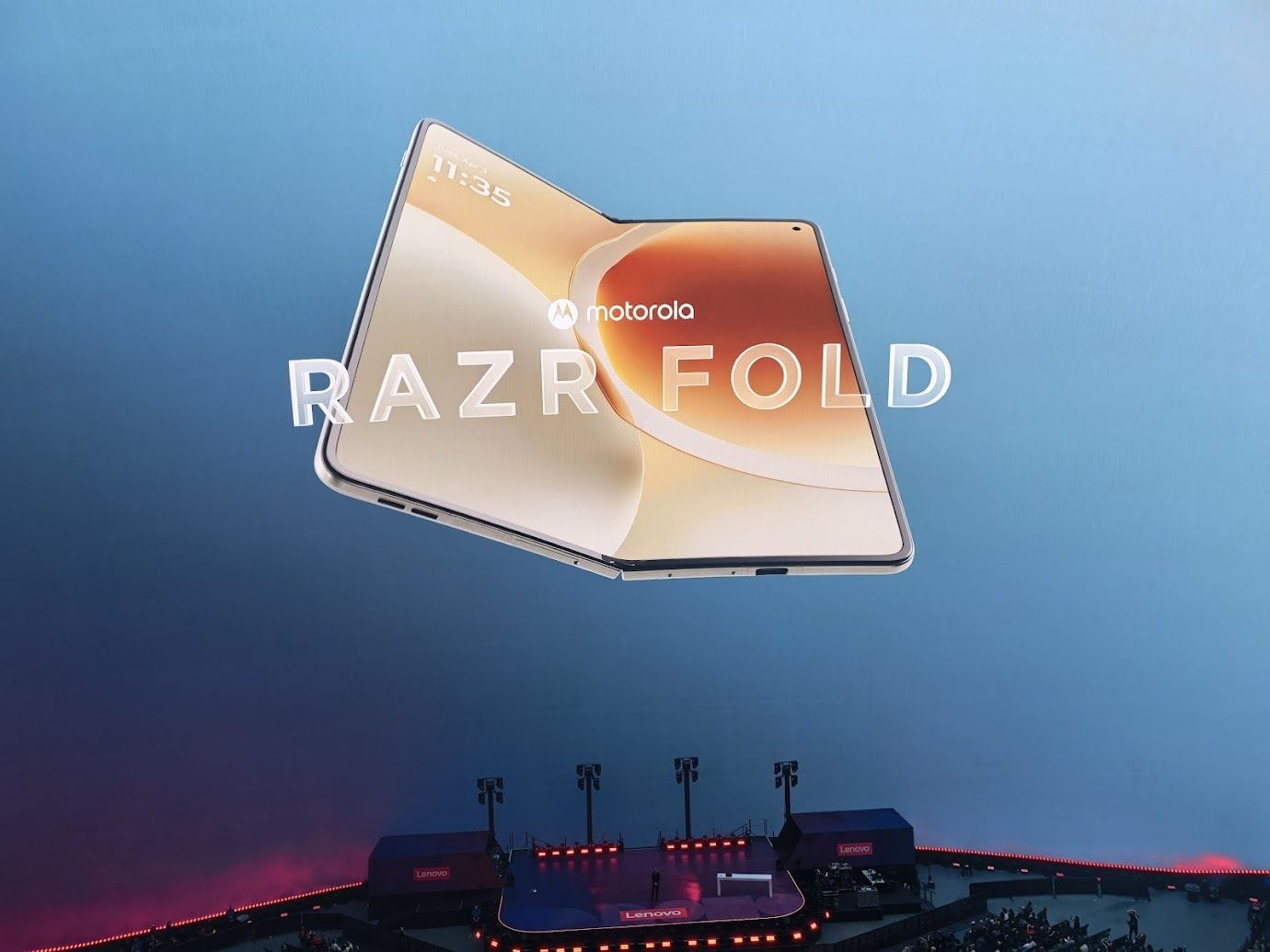
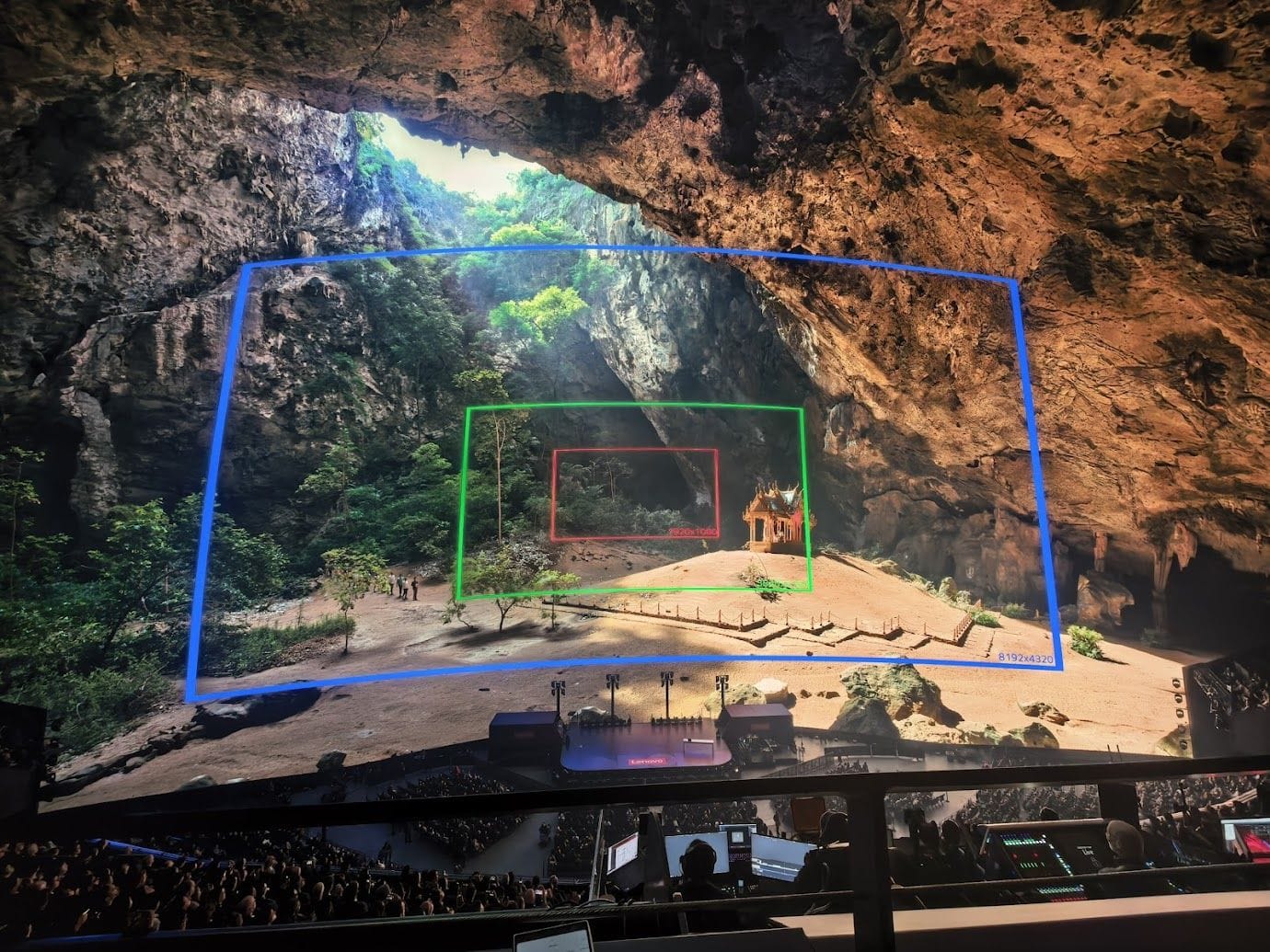
Photo Caption: (Right) Sphere explains the venue's tech. Green square is 4K; blue square is 8K.
Some announcements
There were over a dozen announcements, of which I've highlighted a handful: enterprise servers for AI inferencing, multiple new AI-native devices, new Motorola smartphones, and rollable concept laptops.
Notably, Lenovo announced a programme with Nvidia to help AI cloud providers deploy AI data centres in weeks using standardised designs and pre-validated components.
With manufacturing and integration done by Lenovo, this will start from Blackwell Ultra (GB300 NVL72) with Rubin (Rubin NVL72) to come next.
Lenovo appears to be doing very well and might be onto something here with its end-to-end hybrid AI strategy. I'll talk more about this and its new devices in separate posts.