Inside the first data centre-operated water reclamation plant in Southeast Asia
Bridge Data Centres flips the script on water in Johor

Johor had just one 10MW data centre in 2021. Today, the state at Malaysia's southern edge has operational data centres in the hundreds of megawatts, with gigawatts more under construction. How are operators coping when it comes to water?
Last month, I visited the Bridge Data Centres Water Reclamation Plant, the first data centre-operated water reclamation plant in Southeast Asia. You can read the full 1,500-word piece on Clearly Tech here (1,500 words) or read the shortened version below.
The water situation in Johor
The breakneck pace of data centre growth is straining existing resources in Johor. No wonder Johor will stop approving applications for certain data centres, as reported by The Straits Times last month. Another report by the South China Morning Post noted how investors have been asked to postpone water-cooled expansion projects for at least 18 months.
Of course, this is hardly unique to Johor. But for investors and data centre operators, any delays in accessing water could potentially disrupt carefully laid plans.
Inside the reclamation plant
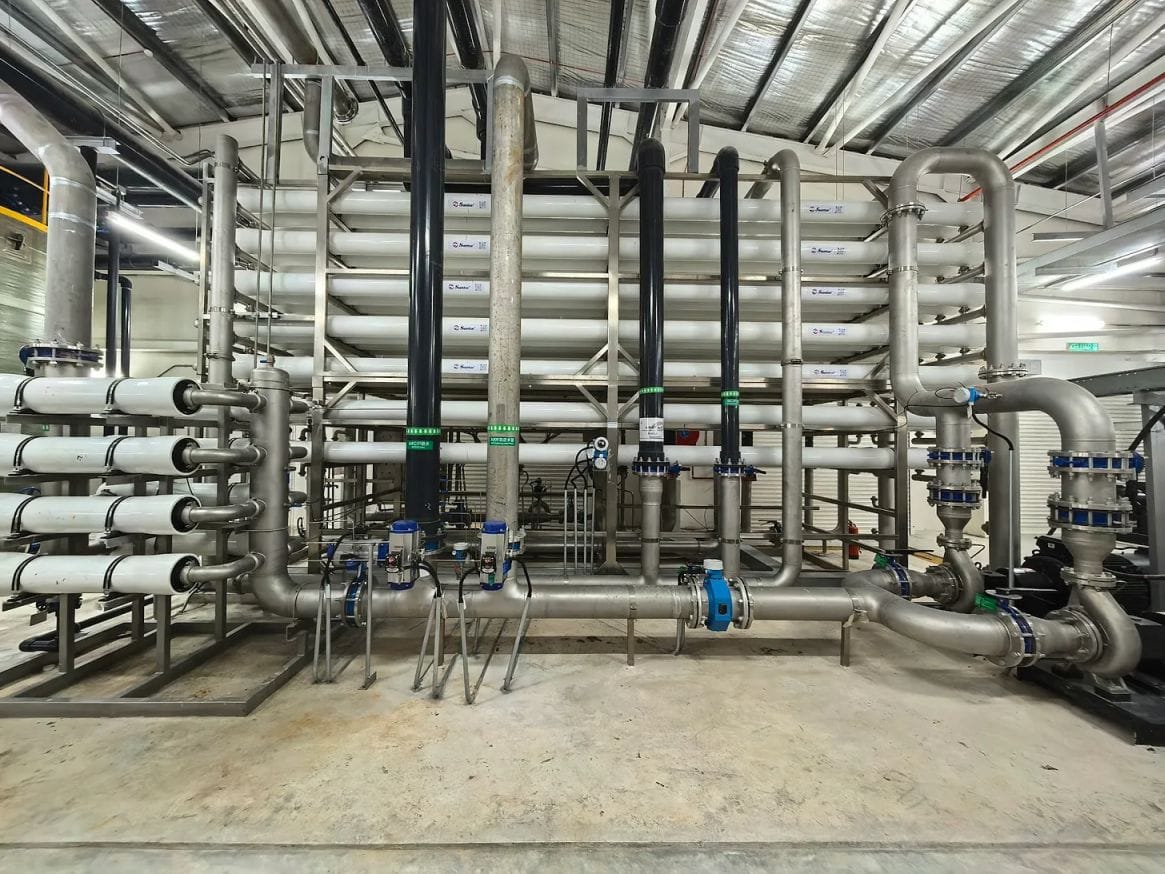
The state-of-the-art facility is built within the compound of Bridge Data Centres' 200MW MY07 data centre campus. It reclaims non-potable treated effluent from sewage treatment plants, cleaning it up into high-grade water suitable for use by data centres. This means MY07 can potentially be completely "water neutral" by reusing effluent water that would have been discarded anyway.
The water treatment process was far more complicated than I initially thought. There are multiple steps involved, including membrane bioreactors and up to three passes of reverse osmosis. That said, some steps like RO could be skipped if incoming water quality is better than expected.
More than just water savings
The water reclamation process is fully automated and can switch seamlessly to handle different water sources: wastewater effluent, rainwater, or surface water. This means data centre operators have more options to improve water usage efficiency and achieve redundancy by eliminating dependence on a single water source.
The 20-year view
How does Bridge Data Centres justify the investment? Well, it has a unique 20-year view of its data centre investments, which translates into a greater willingness to invest in technologies that increase sustainability. According to CEO Eric Fan, the company is also exploring hydrogen-ready power, immersion cooling, and AI-managed energy systems.
The data centre industry is growing up. And in Johor, that means learning to treat its own water.