How electrooxidation extends the life of data centre water
AWS uses the technology in Singapore. I visited a deployment to see how it works.

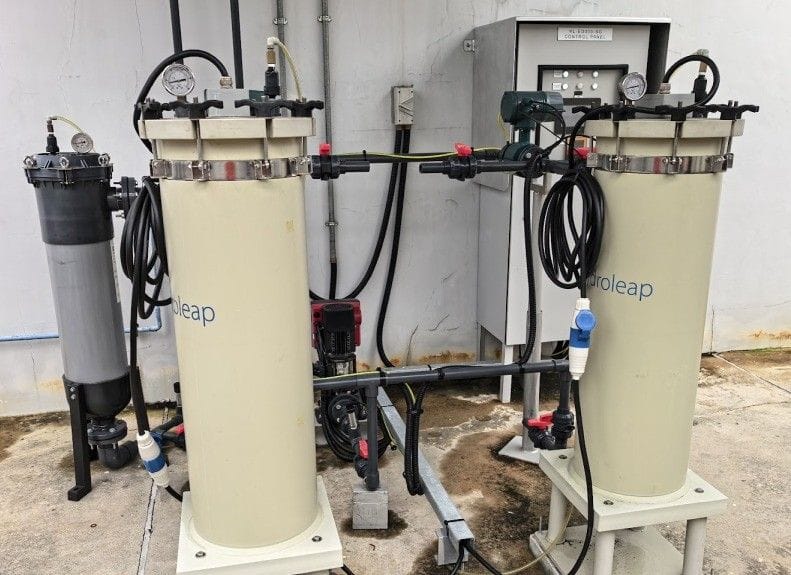
Your data centre's cooling tower is a ticking time bomb of biofilm, scaling, and corrosion. AWS uses electrooxidation to help tackle this in Singapore. Here's how it works.
The water treatment challenge
Of late, I've written about data centre water consumption, a consideration that is rising to the fore as these facilities continue to grow in scale and number. Last week, I shared some of what I learned about water treatment, a topic that likely eludes even some data centre professionals given its complexity.
In a nutshell, proper management of water is crucial to data centre operations. Without treatment, serious problems can crop up quickly. Biofilm, the slimy deposits from microorganisms, reduces cooling efficiency. Scaling, where dissolved minerals form hard layers on surfaces, can damage systems and restrict water flow. And corrosion causes irreversible degradation of metal components. Worse still, the three problems feed each other in ways that dramatically accelerate deterioration.
This is why AWS, in a 2024 blog post, talked about how it is innovating with recycled NEWater and Hydroleap's electrooxidation technology to meet water efficiency goals at its Singapore facilities.
What is electrooxidation?
As its name suggests, electrooxidation uses electricity to generate powerful oxidising agents, which break down and remove contaminants from water. Notably, it can address all three of the problems above, albeit with varying degrees of effectiveness.
To be clear, the technology has several technical hurdles that must be overcome. Electrodes degrade over time, energy consumption can be high, and real-world deployment is complex. Getting the chemistry right for a specific water source and cooling system is not straightforward.
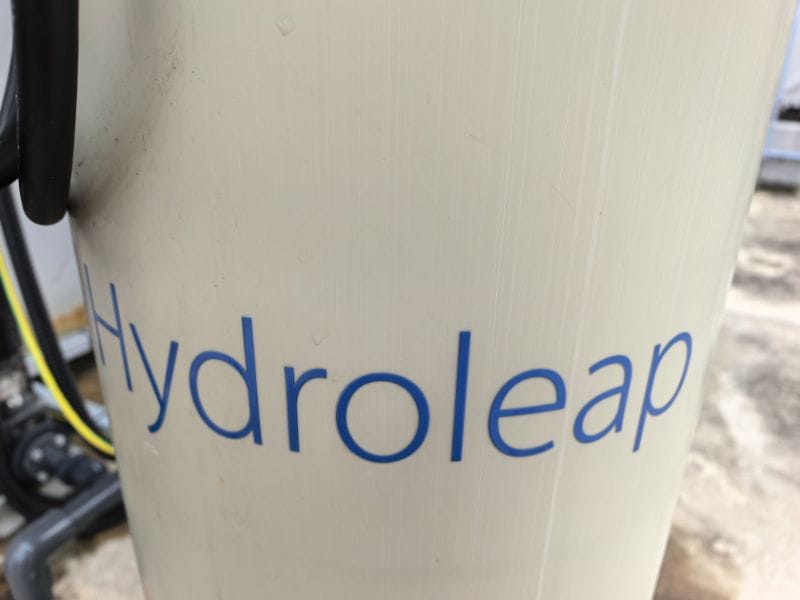
Hydroleap, a local startup, has apparently resolved these hurdles through its deployments across various data centres in APAC and even water utilities.
Electrooxidation in action
I was curious about how a typical deployment works, so I asked Hydroleap's Zachary Loh, and he obliged.
The system looks deceptively simple. A proportion of water is continually diverted from the cooling system and passed through an electrochemical reactor. It then goes through a filter to catch cathode deposits that flake off, and the "polished" water is fed back into the cooling loop. That's it.
The trick, if it can be called that, lies squarely in the science: the cathode and anode materials, coupled with careful calibration for the specific water chemistry of each site. The process works because it removes substances such as dissolved minerals and kills organic matter in the water, which directly improves cooling efficiency in measurable ways.
There is also a secondary benefit. Because the treated water can be reused for longer before being discarded through blowdown, this improves WUE, or Water Usage Effectiveness. In a sector under growing scrutiny over water consumption, that matters.
According to Zachary, the system scales easily with either larger reactors or by deploying more of them in parallel. And the electrodes are good for years, which keeps maintenance straightforward.