Bridge Data Centres explores putting hydrogen generators on barges
Bridge Data Centres signs an MOU to explore the use of offshore hydrogen generators for land-based data centres.

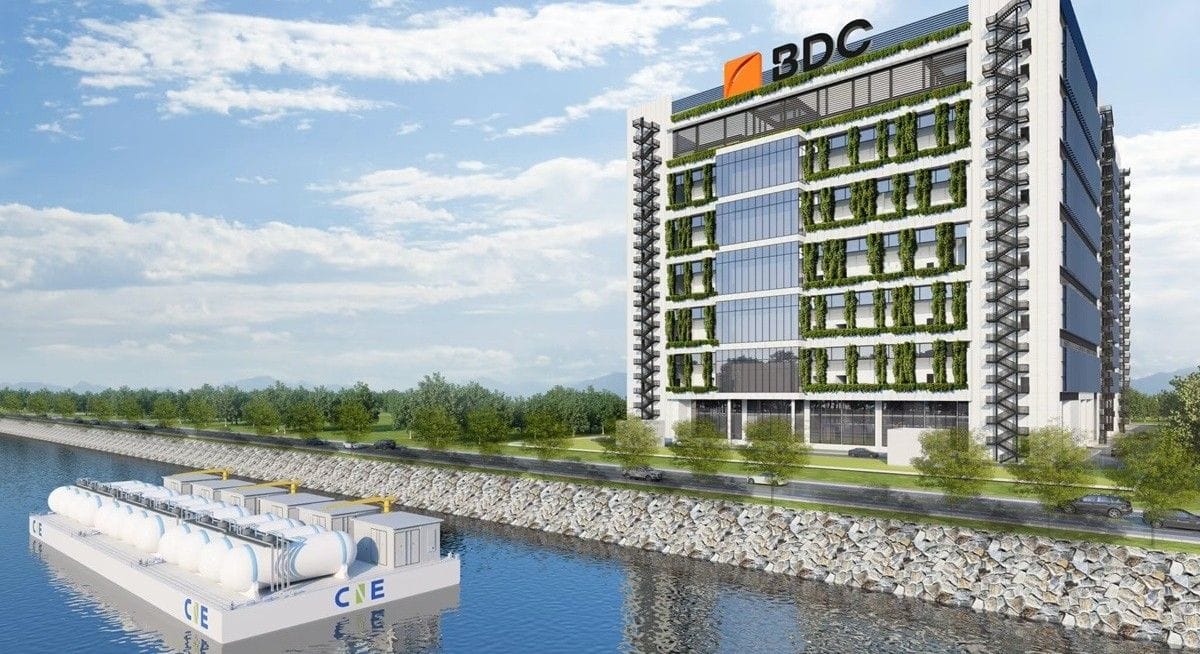
Bridge Data Centres has signed an MOU to explore putting hydrogen power generators on barges to power land-based data centres. Here's what it means.
Floating power plants
The MOU was signed with Concord New Energy (CNE). Together with NTU, the parties will explore putting hydrogen generators on barges offshore.
Why put hydrogen generators on a barge? The press release cited several reasons: onsite power generation, overcoming land scarcity, safety separation from the data centre itself, and modularity.
The idea draws inspiration from Keppel Data Centres' Datapark+ concept, a 1GW data centre campus at the Loyang Offshore Supply Base that features floating data centre modules, seawater district cooling, and on-site hydrogen power generation.
But where Keppel's vision places data halls within floating modules and centralised power and cooling systems on land, Bridge flips the approach by keeping data centres on land and moving hydrogen generators onto barges instead.
This offers an advantage in that power modules can be scaled up by simply adding more barges. There is also the possibility of refuelling directly from a hydrogen tanker.
Effect of DC-CFA2
It's worth noting that an MOU is generally a statement of intent rather than a legally binding contract. From the press release, there doesn't appear to be any investment amount, capacity target, or timeline disclosed.
The recent wave of announcements by data centre operators in Singapore is a direct result of the ongoing DC-CFA2 process, which has been extended from the original three-month period until the end of March. The DC-CFA has emerged as the Singapore government's primary mechanism to allocate new data centre capacity to operators.
As I noted previously, the DC-CFA2 sets an extremely high bar with multiple requirements, including at least 50% green energy use. This is significant, and as far as I am aware, has no precedent as a national policy anywhere else without an abundance of renewables.
The requirement substantially increases costs in a market that is already one of the priciest in the world, but it reflects Singapore's broader strategy of thinking three steps ahead on sustainability and renewables.
When you see announcements around data centre sustainability, connectivity, and AI, it's a strong signal that the operator is preparing a DC-CFA2 submission. How many DC-CFA2-related announcements have you spotted so far?