50K scam calls in 50 minutes from a HDB flat
Why scam calls are so hard to stop, explained through one Singapore case

50,000 scam calls in 50 minutes, all from a single HDB flat. A Malaysian electrician was just sentenced to jail for setting up a telephony system in Singapore for a scam syndicate.
The case caught my attention: tens of thousands of calls from nondescript boxes in a rented apartment. What I learned underscored why scams won't be going away anytime soon.
What happened
Recruited on Telegram, the Malaysian man came to Singapore in March 2025 and rented an HDB flat in the Chai Chee area, which he claimed was for a female employee.
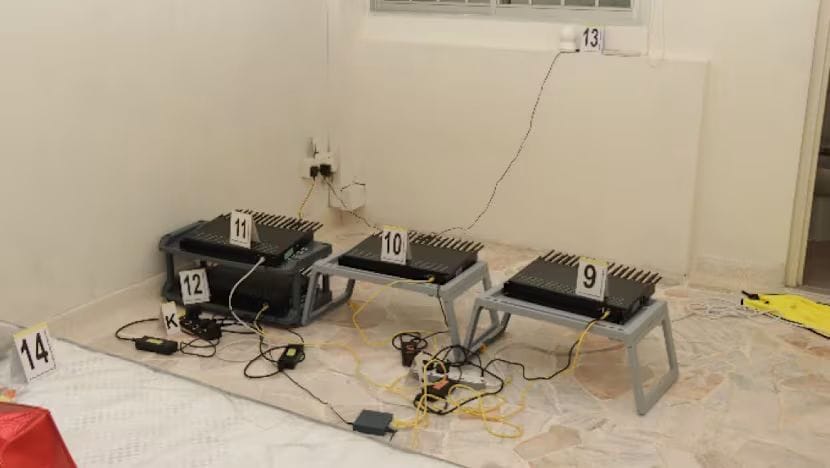
He then installed almost a dozen devices, hooked them up to 1Gbps broadband, set up IP cameras, and changed the locks. He left the country.
The setup was designed to operate remotely, with overseas operators that won't ever stepping foot in Singapore. The police raided the unit on 17 April and seized the devices. Chong was arrested in Johor Bahru two months later and handed over to Singapore police.
50,000 calls in 50 minutes
The man had installed VoIP GSM Gateway devices, which are essentially specialised mobile phones controlled through a computer network. He had installed nine out of 20 planned devices before the operation was uncovered.
I did some research, and the highest-end devices can support up to 64 ports, each being a mobile line that can be used concurrently. In some models, each port supports up to eight SIM cards, which means a single device can house up to 512 SIM cards.
The overseas scam masterminds would initiate calls through the internet using standard IP telephony software, with multiple simultaneous calls per device. Multiple devices scale this up dramatically, and SIM cards are rotated via software to avoid detection by telcos.
The result is staggering. Police forensics said they made up to 50,000 scam calls in 50 minutes from the Singapore setup alone. Even a 0.1% pick-up rate would have yielded 18 potential victims every hour. And this man had carried out similar installations in three different apartments in Johor.
The masterminds remain at large
The story showed me just how difficult it is to stop scams at scale. If you think you are wasting their time by holding on to the line, the scammers won't even notice. The volume is simply too vast for any single call to matter.
It's worth noting how aggressively the authorities in Singapore moved. This setup led to at least $1.6 million in losses and 42 police reports. Mobile numbers from the police reports were likely used to trace the source.
From my previous conversations with experts, I know it is possible to triangulate the precise location of a wireless device. Presumably, this was how authorities found the unit and gained entry with the help of a locksmith.
The electrician was sentenced to five years and three months' jail. But he was just the installer. The masterminds remain at large.